


Reinventing HR Technology at the Crossroads of Strategy and Ethics
In a world where talent drives competitive advantage, HR technology has emerged as both oracle and enigma. Predictive people analytics promises unprecedented foresight into talent risks, performance patterns, and workforce potential. Yet as organizations lean harder on algorithmic insight, a stark tension reveals itself: are we enhancing human judgment or subordinating it to inscrutable data models? This debate is not abstract. Investors, CHROs, and even boards now treat predictive HR analytics as strategic machinery, while critics warn that it erodes autonomy and amplifies bias. To understand the future of work, we must confront a fundamental question: can HR technology provide strategic foresight without sacrificing human judgment, empathy, and ethical autonomy?
The Evolution of HR Technology in Talent Decision‑Making
From Gut Feeling to Algorithmic Insight
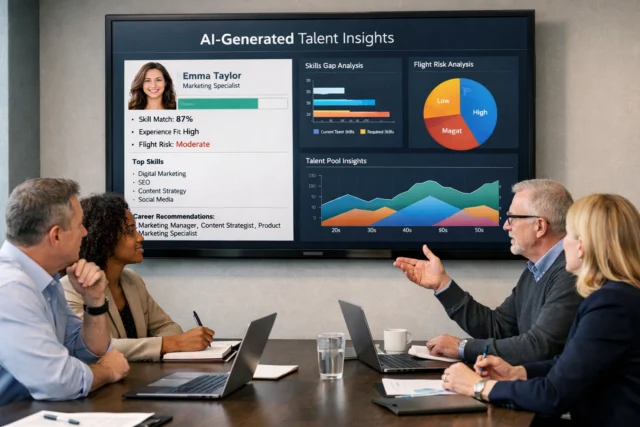
HR technology’s rise parallels the data revolution in business. Traditional HR decisions were driven by manager intuition, anecdote, and surface metrics like tenure. Today, people analytics aggregates hundreds of data points like; performance, engagement, mobility, and collaboration networks, to model what might happen next. Rather than guessing which employees may leave, predictive models flag flight risks early. Rather than relying solely on interviews, AI‑augmented tools help match candidates to roles. This transformation is real, and executives are investing accordingly. McKinsey research shows data‑driven talent decisions can enhance retention and performance outcomes if implemented with governance and clarity of purpose. McKinsey on data in HR decisions
Predictive HR Technology and the New Standard of Efficiency
Predictive people analytics sets new expectations for organizational responsiveness. Workforce planning becomes dynamic instead of periodic; leadership pipelines are mapped with behavioral and performance patterns instead of subjective assessments. Companies with advanced HR technology invest in dashboards that alert when critical skills decline and when engagement drops below threshold values. This moves HR from reactive to strategic planning. Yet efficiency alone does not guarantee human‑centered decisions. Without contextual judgment, a spike in attrition risk flagged by HR analytics may lead to knee‑jerk policy shifts that ignore employee nuance. The core challenge is ensuring predictive models inform rather than dictate decisions.
Predictive People Analytics: A Strategic Asset or a Surveillance Tool?
Strategic Forecasting and Risk Mitigation
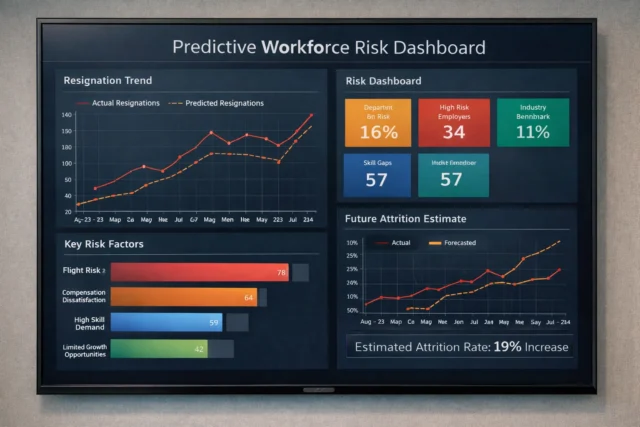
Predictive HR technology’s biggest promise is anticipating talent risks before they disrupt performance. When models flag potential turnover trends, HR leaders can deploy interventions targeted at high‑impact individuals or teams. This shifts the organization from firefighting to strategic workforce planning. By aligning HR analytics with broader enterprise forecasting, companies can synchronize talent decisions with business cycles and market changes. Additionally, predictive people analytics can help organizations identify hidden pockets of high performance, inform succession plans, and quantify the ROI of learning programs, all of which traditional HR metrics struggle to capture with precision.
The Ethical Cost of Continuous Monitoring
Yet the same tools that forecast attrition also enable pervasive employee monitoring, a concern for privacy and ethical autonomy. Continuous tracking of emails, keyboard activity, meeting cadence, and sentiment analysis may yield indicators for burnout or disengagement. But this raises crucial ethical questions: when does predictive insight cross into intrusive surveillance? Transparency becomes paramount when tracking increases psychological stress or erodes trust. Indeed, enterprises ignoring ethical governance risk not just legal scrutiny but cultural damage. Harvard Business Review warns that data misuse can undermine trust unless organizations build clear policies around consent and explainability. HBR on trust and analytics ethics
Predictive People Analytics: Strategic Benefit vs Ethical Risk
| Strategic Benefits of Predictive Analytics | Ethical & Cultural Risks |
| Anticipates turnover and skills gaps | Perceived invasion of privacy |
| Informs performance optimization | Risk of algorithmic bias |
| Enables targeted learning and development | Potential erosion of trust |
| Aligns workforce planning with strategy | Increased surveillance feel |
HR Technology and the Reinvention of DEI Strategies
Data‑Driven Equity or Algorithmic Exclusion?
Proponents argue predictive people analytics can accelerate Diversity, Equity, and Inclusion (DEI) goals by spotlighting inequities invisible to the human eye. When workforce data disaggregates by gender, race, tenure, and role, leaders can detect disparities in pay, promotion timing, and access to development opportunities. However, predictive HR models often mirror the biases embedded in historical data. If past decisions favored one group over another, analytics can amplify those patterns under the guise of “objective” insight. This paradox; that tech intended to democratize opportunity may inadvertently entrench exclusion, requires urgent attention. Without careful bias detection and model auditing, predictive tools become liabilities rather than assets to DEI.
HR Analytics for Inclusive Workforce Planning
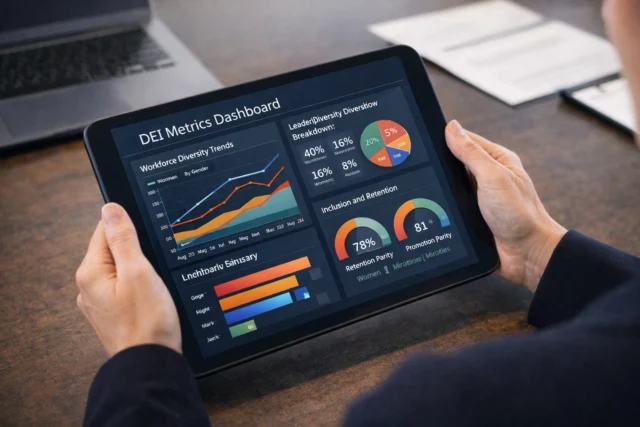
When deployed thoughtfully, HR analytics can be a powerful agent for inclusion. By tracking representation, promotion rates, and retention across demographic segments, organizations can measure progress against DEI goals in real time. Predictive models can also simulate the impact of interventions, such as mentorship programs or flexible work policies, before they are rolled out at scale. This enables HR teams to prioritize programs with the greatest potential for equitable impact. Companies that integrate DEI into their predictive frameworks send a strong cultural signal: equity isn’t just a compliance metric; it’s a strategic imperative.
Human Judgment vs Algorithmic Precision: A False Dichotomy?
Augmentation, Not Replacement
Critics often frame the debate as human judgment versus predictive analytics. This dichotomy is misleading. The real value arises when HR technology augments human insight, not replaces it. Predictive models can analyze complex patterns that human cognition cannot, but human judgment provides context like; understanding culture, morale, and nuance that data alone cannot capture. This symbiosis is where HR leaders must invest. Developing AI literacy among HR professionals is not optional; it’s strategic. When data scientists and HR practitioners collaborate, predictive output becomes a conversation starter rather than a decision mandate.
The Risk of Over‑Reliance on Models
Despite augmentation benefits, there are real cases where over‑reliance on algorithmic output led to adverse decisions. Models can be brittle, sensitive to changes in context or based on unrepresentative data samples. For example, if a predictive hiring model prioritizes tenure over potential, it may systematically undervalue emerging talent or non‑traditional backgrounds. When HR leaders defer too quickly to machine outputs, they risk entrenching blind spots. Recognizing when to question, override, or refine predictive insights is as strategic as the analytics itself. Human judgment remains indispensable in interpreting nuance, ethical concerns, and contextual exceptions.
Judgment vs Algorithm: When HR Decisions Diverge
| Scenario | Human Judgment | Algorithmic Recommendation |
| Hiring for cultural fit | Qualitative insights | Based on historical role patterns |
| Promotional readiness evaluation | Manager feedback + nuance | Predictive performance trajectory |
| Emerging talent identification | Intuition + exploratory potential | Modeled on past outcomes |
| Rapid reorganization response | Stakeholder nuance | Forecasted productivity changes |
Building Responsible HR Technology for the Next Decade
Governance, Oversight, and Explainability
For predictive people analytics to be trusted, organizations must establish governance frameworks that emphasize transparency, accountability, and explainability. This means not only auditing algorithms for bias but communicating how models work to stakeholders. Black‑box systems may offer powerful predictions, but without explainability, they erode confidence. Clear governance ensures that predictive HR technology remains aligned with organizational values. Deloitte highlights that responsible AI frameworks help reduce risk while increasing adoption among stakeholders. Deloitte on responsible AI governance
Training HR leaders to understand model logic, limitations, and appropriate use cases is critical, not just for compliance but for strategic leadership.

Designing Human‑Centered Predictive Systems
The future of HR technology lies in human‑centered design. Predictive tools must reflect empathy, ethical boundaries, and user experience, not just statistical efficiency. This requires HR, legal, and data science teams to co‑design systems, with regular feedback loops from employees. Embedding mechanisms for employee consent, opt‑out, and continuous monitoring of model fairness helps ensure that analytics serve people rather than exploit them. As predictive people analytics becomes more sophisticated, the organizations that thrive will be those that treat data as a tool for human insight, not a substitute for human judgment.
Betting on Intelligence but Which Kind?
Predictive people analytics is not a panacea, but when integrated with ethical governance and human judgment, it becomes an indispensable strategic asset. HR technology alone does not guarantee better outcomes; it is the application that matters. Leaders must resist the temptation to outsource discernment and instead cultivate a narrative where data empowers rather than dictates. The future of work rewards foresight, but not at the expense of empathy, context, and ethical clarity. When predictive models are transparent, fair, and aligned with human‑centric values, organizations gain not only foresight but also trust; an asset far more durable than any algorithmic prediction. In the evolving landscape of HR analytics, the real competitive edge lies in intelligent integration, harnessing HR technology to elevate human judgment rather than suppress it.
References
McKinsey: How Data-Driven HR Decisions Drive Value
Harvard Business Review: Building Trust in a Data-Driven World
Deloitte: Responsible AI — A Framework for Trustworthy AI
HR Technology and Employee Retention in the Age of Data – H-in-Q