

The Hidden Hand Behind Customer Experience
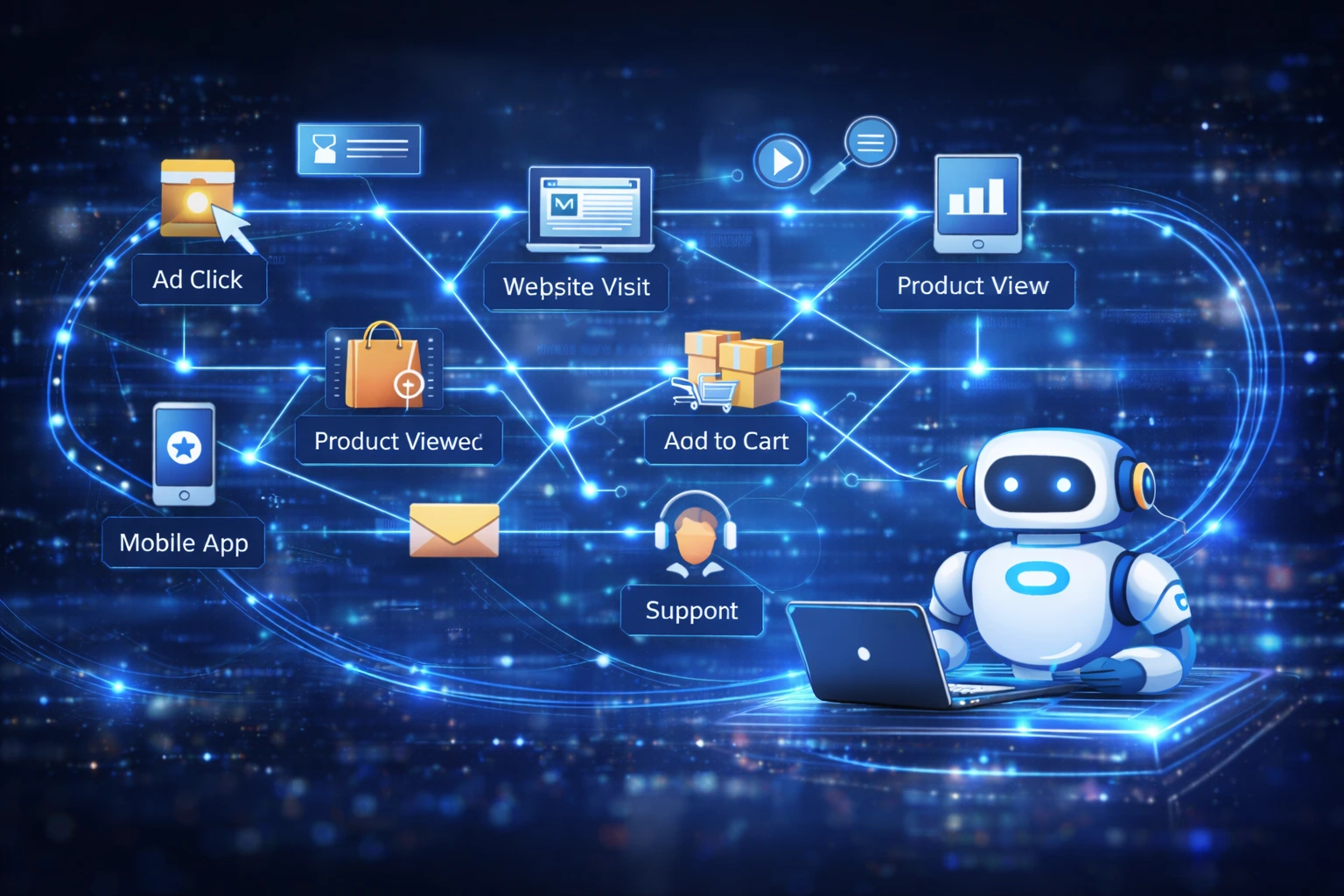
AI no longer lingers behind the scenes; it now orchestrates entire customer journeys. Today’s companies tout smoother, frictionless flows: personalized recommendations, instant support, dynamic offers. Underneath that gloss lies a more unsettling question: is this enhanced customer experience an act of service or subtle manipulation? The stakes are high: autonomy, trust, even free will. As brands increasingly deploy artificial intelligence, the line between serving customers and shaping behavior blurs. This is not a neutral evolution. Businesses are now rewriting the rules of engagement often without customers realizing the changes unfolding.
The Rise of AI in customer experience: Efficiency or Exploitation?
From Support Tool to Strategy Driver
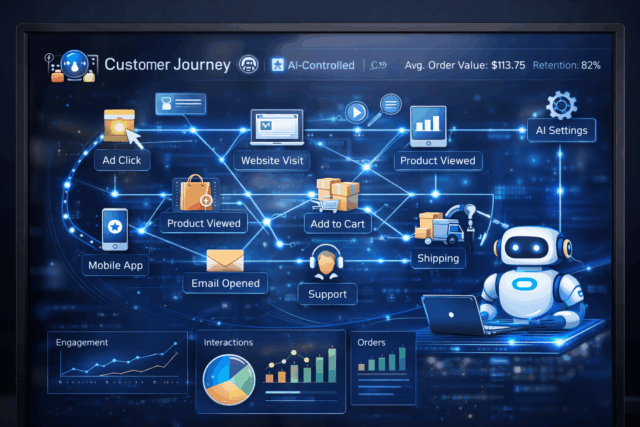
AI started modestly: automating tickets, sorting support emails, freeing human agents from repetitive tasks. Gradually marketers realized the potential for AI to influence far more, not just resolving issues, but proactively guiding every customer interaction. Today AI recommends what you buy, when you see what content, even which price offers you receive. The shift from “support tool” to “strategy driver” transforms AI from helper to decision-maker. This transition bolsters operational efficiency; faster responses, 24/7 coverage, scalable personalization. Evidence shows companies embedding AI in customer journeys see measurable gains in loyalty, growth, and cost reduction. (McKinsey & Company)
The Thin Line Between Optimization and Overreach
Efficiency sounds benign until it overrides choice. When AI defines what “better” looks like for you not based on your conscious preferences, but on aggregated data and predictive patterns, optimization edges into overreach. The risk: experiences optimized not for you, but for what boosts company metrics. What feels like a smarter journey may instead be a curated path steering you toward predetermined outcomes.
Predictive Analytics World : Shaping Decisions Before You Make Them
Anticipation or Manipulation?
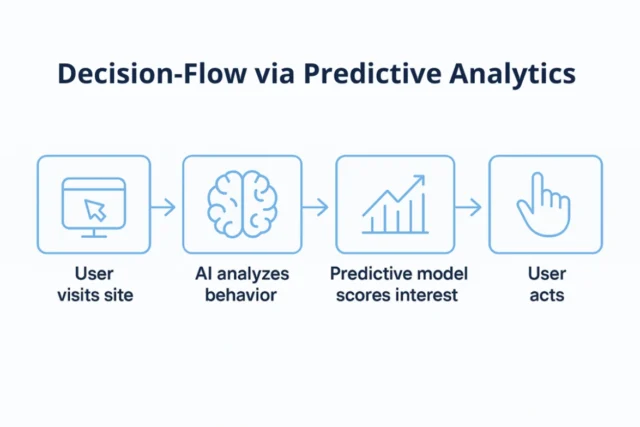
In the age of big data, predictive analytics promises to anticipate needs often before the customer realizes them. By analyzing browsing habits, purchase history, and behavioral signals, AI builds a profile of what you might want next. On the surface, this enables seamless convenience: relevant offers, tailored content, timely suggestions. But there’s a darker undercurrent. Predictive analytics respond to what it anticipates. That anticipation can shape what you see, what you consider, and ultimately what you decide, sometimes nudging decisions without conscious consent. This transforms choice architecture: instead of offering a wide menu, companies subtly steer you along narrowed paths.
Data‑Driven Design That Chooses For You
Once predictive models identify patterns, businesses design entire experiences around them. From recommended products to homepage layout, from push notifications to dynamic pricing, AI-driven design begins selecting what you see, when, and how. The illusion of freedom remains; the reality is a funnel structured to guide. According to recent e‑commerce research, predictive analytics leads to measurable uplift in conversion rates and customer retention by pre-empting needs and eliminating friction. (ResearchGate) Passing this off as “customer experience optimization” glosses over the deeper issue: behavioral orchestration at scale.
Decision‑Flow via Predictive Analytics
Personalization in Marketing: Service or Surveillance?
Relevance That Feels Too Accurate
For many users, personalization feels like magic, from product suggestions that match obscure tastes to ads that reflect life context. Such tailored experiences can feel deeply personal, elevating the customer experience from generic to intimate. Studies show that personalization marketing reduces acquisition costs by up to 50% and can lift revenue by 5–15%, offering 10–30% better marketing ROI. (McKinsey & Company) Businesses often present this as enhanced service, giving customers what they want, when they want it.
Targeted or Tracked? The Surveillance Paradox
The same mechanisms that enable personalization are fundamentally data‑hungry. Behind every recommendation lies a trail: clicks, views, time spent, location, device usage. As companies aggregate these traces, they reconstruct user identity and context with unsettling precision. Personalization becomes surveillance when customers are unaware of how much is known. The promise of better marketing comes at the cost of privacy and autonomy.
Benefits of Personalization in customer experience and Risks & Downsides (Surveillance)
Benefits |
Risks & Downsides |
|
| Enhanced relevance of offers & content | Loss of privacy through data tracking | |
| Improved engagement and loyalty | Behavioral profiling without consent | |
| Higher conversion & marketing ROI | Lack of transparency on data use | |
| Seamless cross‑channel experience | Potential for misuse or data leaks |

Algorithmic Bias: customer experience for Whom?
When Data Excludes by Design
AI systems learn from data, but that data often reflects societal biases and may marginalize certain groups. When companies rely on such data to shape customer experience, they risk embedding exclusion into the journey. Whether recommending products, deciding who sees which promotions, or prioritizing support requests, biased data leads to unequal treatment. For some users it means limited offers, misaligned content, degraded service.
Justice in the Journey
Bias isn’t inherent to data alone; it requires conscious correction. Companies ignoring fairness end up privileging certain demographics and penalizing others. Real fairness demands algorithmic audits, inclusive design, and ongoing review. Without them, “optimized” experiences end up favoring some users and disadvantaging others.
- Biased product or content recommendations
- Unequal access to discounts or premium offers
- Differential support response or prioritization
AI Nudging: Optimizing or Orchestrating Behavior?
Welcome to the Age of Invisible Persuasion
“Nudging” once referred to architecture of choice, framing options to guide behavior without restricting freedom. With AI, nudging becomes invisible persuasion: subtle push notifications, timed offers, content sequencing. What feels like helpful suggestions can influence decisions not by choice, but by design. This is orchestration!
Digital Architecture That Directs, Not Supports
User interfaces shaped by AI become digital funnels, steering consumers toward desired outcomes. From checkout speed‑ups to countdown timers, from “only 2 left” alerts to auto‑renewal prompts, design nudges push users toward pre‑designed behavior. In the name of better customer experience, companies end up choreographing behavior.
Dashboard: AI‑Nudge Journey Map
Opt-Out Is a Myth: The Illusion of Customer Control
Consent Without Understanding
Many platforms present opt-in/opt-out choices, but often in fine print, buried deep, or framed in confusing layouts. Real consent would require transparent explanation of what data is collected, how it’s used, and what it means for future interactions. Instead, customers click “accept” to proceed, rarely understanding how AI will shape their journeys.
The UX of Control Is a UX Illusion
Even when users attempt to opt-out, systems may retain memory, rebuild profiles, or continue applying algorithms based on inferred data. Control becomes superficial: a checkbox doesn’t erase data logs or predictive models. What companies label as “personalization settings” often controls little.
“Customer Control” in UX vs. Real Autonomy
User Settings (Declared Control) |
Actual Control over customer experiance |
| Toggle marketing emails on/off | No influence over predictive profiling or content sequencing |
| Clear cookies | AI may still infer preferences from account behavior |
| Privacy settings page | Complex, hidden — rarely revisited after first visit |

Can Ethical AI Enhance Customer Experience without Manipulation?
Transparency is the New Trust
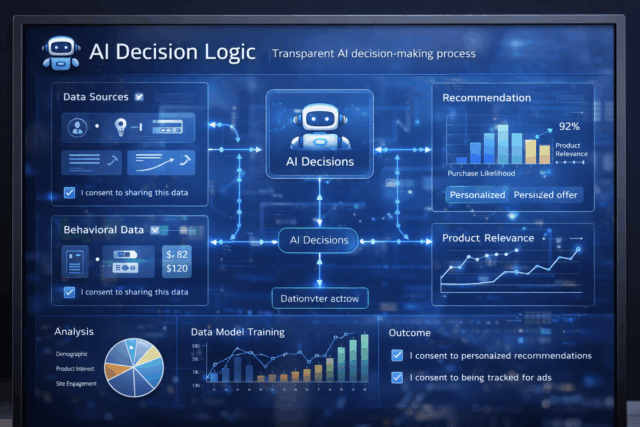
AI doesn’t have to be invisible. Companies can and should open the hood. Explainable AI, transparent data collection and usage policies, and clear communication can turn “black box” systems into trust‑building tools. When customers understand how and why decisions are made, trust replaces suspicion.
Design for Empowerment, Not Control
Ethical design doesn’t mean degraded performance. Responsible companies can build AI-driven experiences that honor choice, fairness, and privacy while still delivering value. Key practices:
- Algorithmic transparency standards and regular audits
- Human-in-the-loop oversight for sensitive decisions
- Clear, proactive education about what personalization means
- Opt-in flows with real informed consent
Trust Is the Currency of the AI‑Powered Customer Experience
The deployment of AI in shaping customer experience is inevitable and beneficial when handled responsibly. Nevertheless, without oversight the same tools risk turning personalized CX into covert behavioral design. The power imbalance is real: companies influence perceptions, decisions, and ultimately, behavior. The choice is not between innovation and stagnation it’s between AI guided by ethics and AI driven by exploitation. Companies that commit to transparency, fairness, and real user empowerment transform AI-driven CX from a subtle form of manipulation into a genuine enhancement. The future of customer experience should be shaped by trust, not algorithms operating in the shadows.
References
- How Personalization Is Changing Marketing — McKinsey
- Prediction: The Future of Customer Experience — McKinsey
- The Ethics of AI in Marketing — Harvard Business Review
- Can AI Be Ethical? — World Economic Forum
- Explainable AI: A Guide for Business — IBM
- Future of Customer Experience :Journey Mapping 2.0?