

The Algorithmic Seduction of Shopping
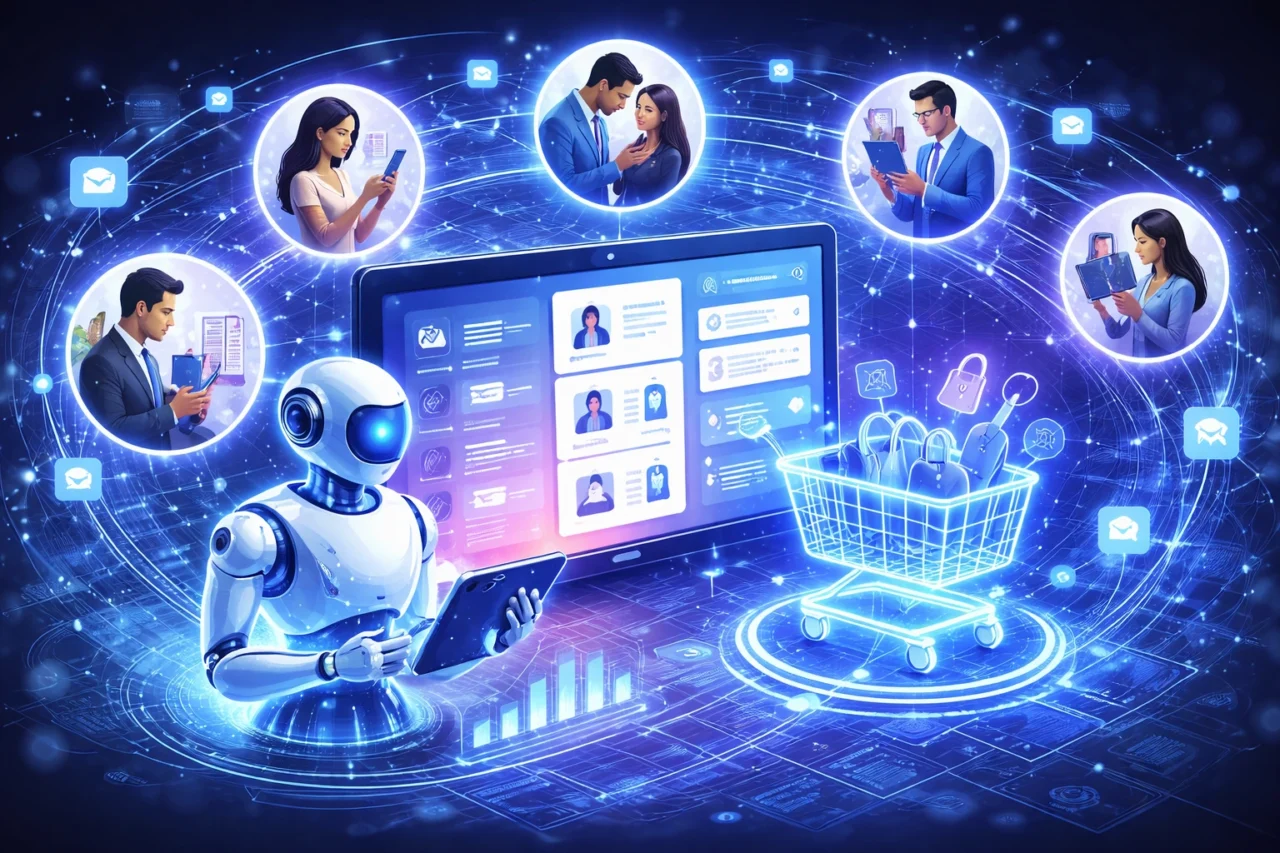
In the modern digital age, e‑commerce no longer means simple online catalogs and checkout carts. The rise of AI has transformed browsing into fine‑tuned, hyper‑personalized experiences that anticipate what the shopper wants, often before the shopper knows it themselves. This shift reframes e‑commerce as a psychological battleground: convenience and speed on one side, consumer autonomy and agency on the other. The question is not whether AI belongs in commerce, but how deeply it should embed itself into decision‑making. With AI for e-commerce, the browsing journey becomes crafted by algorithms. Those algorithms no longer assist; they lead.
The AI Overhaul of Traditional E‑commerce Interfaces
Replacing Click‑Based UX with Predictive Journeys
Traditional e‑commerce interfaces relied on static search bars, fixed categories, and manual filters. That model made sense when data was limited and users had to manually navigate catalogs. Now, AI for e-commerce delivers predictive journeys: shoppers are guided dynamically based on past behavior, real‑time signals, and machine‑learning shaped profiles. The result is far fewer clicks, less friction, and a much faster path to purchase. As a consequence, “search” becomes optional, replaced by a tailored feed of suggestions.
Typical legacy UX elements replaced by AI-driven alternatives:
- Static filters (size, color, price) → dynamic suggestions
- Manual search input → contextual recommendations
- Generic product listings → personalized feeds
- One-size-fits-all navigation → adaptive user journeys
Why Search Bars Are Becoming Obsolete
Search bars once gave users control; now AI for e‑commerce assumes and predicts their intent. Real-time behavioral cues, location data, and browsing patterns allow platforms to infer what the user wants and surface items proactively. This shift removes conscious choice from the equation. The system doesn’t wait for you to ask but it decides for you. As a result, the notion of “searching” feels antiquated. In today’s e‑commerce, algorithms don’t just assist; they anticipate and deliver.
Personalization Engines in E‑commerce: Code or Coercion?
How AI Analyzes Data to Curate Individual Shopping Paths
Behind every personalized storefront lies layers of data: browsing history, past purchases, location, device type, time of day. With AI for e‑commerce, this data is fed into recommendation engines that learn patterns and infer preferences. Each user sees a unique catalog, meaning no two experiences are identical. That drives conversion: platforms that employ personalization often see measurable revenue gains. (McKinsey & Company)
Dashboard: Customer Segmentation & Real-Time Targeting

This segmentation dashboard illustrates how AI divides customers not by demographic, but by behavior, enabling dynamic offers, re‑engagement, and cross‑sell strategies.
The Thin Line Between Customization and Control
What begins as helpful customization risks evolving into subtle control. When every recommendation is computed rather than chosen, the illusion of choice remains but autonomy erodes. A shopper may feel catered to, but in truth the path is orchestrated. AI for e‑commerce thrives on prediction: the more predictable a user becomes, the less agency they retain. That raises the question: is personalization empowering the user or manipulating them for maximum conversion?
Emotionally Intelligent AI: The Next Layer of E‑commerce Personalization
Emotion Recognition in Product Placement
Emerging AI technologies now go beyond clicks and history, they aim to read emotions. Through computer vision, facial expression analysis, or sentiment detection in voice/text, platforms attempt to gauge the user’s emotional state and adapt accordingly. This “emotion AI” promises to tailor e‑commerce content not just to what you did yesterday, but how you feel right now. (MIT Sloan)
From Product Feeds to Emotional Feeds
Instead of pushing products based solely on inferred taste, platforms can serve items that match mood: comforting goods if the user seems stressed, bold or indulgent items if the user seems excited. That transforms e‑commerce from a market of needs and wants to a mood‑driven emotional marketplace.
Traditional Recommendation Engines vs Emotion‑Detection Systems
| Feature | Traditional Recommendation | Emotion‑Based System |
| Data input | Browsing history, purchases | Facial expressions, tone, sentiment |
| Trigger condition | Behavior patterns | Emotional state, real‑time cues |
| Adaptation speed | Periodic | Real‑time |
| Primary goal | Relevance, cross-sell | Engagement, impulse trigger |
| User awareness | Visible to user | Often opaque |
Emotion‑detection systems blur the boundary between helpful suggestions and psychological nudging. Are they reading your mood, or shaping it?
Predictive Analytics: The Crystal Ball of AI for E‑commerce
Forecasting Demand, Returns, and Customer Lifetime Value
Beyond serving users, AI for e‑commerce empowers businesses to anticipate demand, optimize pricing, and reduce inventory waste. Predictive analytics models forecast trends, seasonal demand, and even individual churn likelihood. That enables just-in-time stocking, personalized discounts, and more efficient logistics. The result: lower costs and higher margins. As platforms scale, this advantage compounds into significant competitive differentiation.
Dashboard: E‑commerce Predictive Demand Forecast
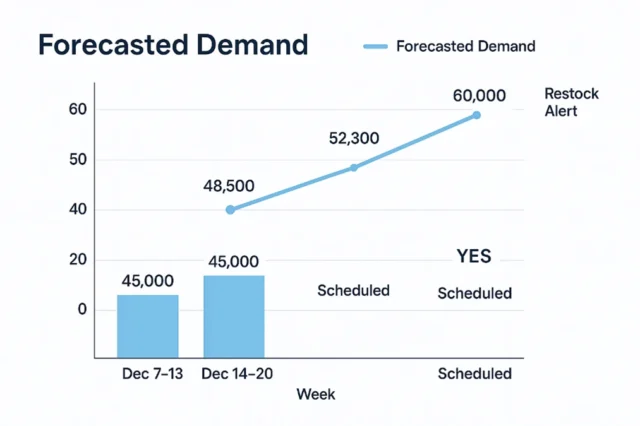
Such dashboards allow commerce teams to move from reactive to proactive, turning unknown demand into calculated supply.
When Optimization Undermines Spontaneity
But predictive control comes at a cost. If every customer journey, every stock move, every price is pre‑computed, where is space for spontaneity; for serendipity, discovery, or human-driven change? Over‑optimization flattens diversity. Products that would surprise or delight are filtered out because they don’t match predicted patterns. In the pursuit of efficiency, the unpredictability that fuels trends and discovery vanishes.
AI Chatbots in E‑commerce: Tools of Autonomy or Addiction?
24/7 Agents, Not Just for Support

AI chatbots have evolved beyond resolving customer queries. In today’s e‑commerce environments, chatbots can guide product discovery, upsell, manage returns, and complete full transactions. They simplify the shopping journey, no browsing, no search, just conversational buying. Platforms embed AI-driven agents as virtual sales clerks. (ijert.org)
Capabilities of Modern E-commerce Chatbots:
- Real-time Q&A about product details and fit
- Personalized recommendations based on user history
- Upsell and cross-sell during conversation
- Order management, returns, and post-sale guidance
When Convenience Becomes Reliance
While chatbots offer ease and speed, they also foster dependency. Shoppers may stop exploring independently, relying instead on the bot’s suggestions. That reduces human agency and consolidates decision‑power within the algorithm. The convenience of chatbot-guided shopping can quietly shift control from the user to the platform.
The Dark Side of Personalization in E‑commerce
Consent Theater and Algorithmic Profiling
Most customers are oblivious to how much personal data powers their personalized experience. Data is harvested from clicks, searches, session duration, location often without explicit, informed consent. Platforms build detailed psychological and behavioral profiles under the guise of “better service.” That raises critical ethical concerns: are users really opting-in, or is consent assumed by default?
When Bias Creeps into the Shopping Algorithm
Algorithms reflect the data they’re trained on. If historical data embeds socioeconomic, cultural, or gender bias, AI for e‑commerce will replicate and amplify these biases, influencing who sees what products, at what price, and in what volume. That can reinforce inequality or discrimination without transparent oversight.
Ethical Risks vs Potential AI Safeguards
| Ethical Risk | Potential Safeguard |
| Lack of informed consent | Clear opt-in & transparent data policies |
| Privacy intrusion & profiling | Data minimization & anonymization |
| Algorithmic bias / exclusion | Bias audits & diversity-aware training data |
| Manipulative emotional triggers | Ethical design frameworks & user control toggles |
Without guardrails, personalization becomes surveillance; recommendation becomes coercion.
AI‑Driven E‑commerce Leaders: Who’s Winning and Why
E-commerce Case Study: The Predictive Dominance Model
Major players that mastered AI for e‑commerce like those with vast data, agile infrastructure, and the hunger to optimize every click, are already reaping disproportionate gains. Their AI-driven interfaces, dynamic pricing, and predictive merchandising ensure they reinforce their dominance. Middle-tier or legacy e‑commerce brands are left struggling to retrofit outdated architectures.
Platform-Based Personalization: Scale Through Ecosystems

Other winners are platforms that empower smaller retailers to plug into shared AI backbones. Through SaaS solutions and AI-as-a-service, these platforms democratize advanced personalization, but also standardize it. As more merchants rely on the same AI tools, differentiation vanishes. The power shifts from brand uniqueness to algorithmic conformity.
Why AI‑powered e‑commerce leaders dominate:
- Data scale: larger user base → richer insights
- Infrastructure: ability to deploy real‑time AI at massive scale
- Automation: from browsing to checkout, minimal human intervention
- Network effects: more users → better AI suggestions → more users
Personalization is Power, and AI Holds the Reins
AI for e‑commerce does not merely help but it commands. Through predictive interfaces, behavioral analysis, emotion sensing, and automated agents, AI transforms online shopping into a deeply curated, often invisible, psychological experience. This revolution amplifies efficiency, conversion, and revenue. It also recalibrates autonomy: the user no longer just chooses; the system chooses for them. The old debate of convenience vs autonomy ceases convenience wins. In the marketplace of tomorrow, personalization isn’t just a feature. It is the architecture.
References
- What is Personalization? – McKinsey & Company
- Emotion AI, Explained – MIT Sloan
- AI-Powered E-commerce Solutions – IJERT
- ai dynamic pricing future efficiency or end of trust – H-in-Q