


Small Business Marketing Paradox: Why Marketing Matters Now More Than Ever
Small businesses face a brutal reality: giant competitors wield vast budgets while lean teams must deliver disproportionate results. Marketing is the oxygen small businesses breathe to survive and scale. Traditional advertising has given way to marketing digital, where every click and conversion must be measured, optimized, and justified. The rise of AI, automation, and analytics means that even lean teams can punch above their weight if they pick the right tools. Choosing the best marketing tools can make the difference between stagnation and explosive growth. This article confronts the myth that only big companies dominate online. It shows how AI‑powered marketing digital tools empower small players to compete in both local and global markets today.
Marketing for Small Businesses Is About Leverage, Not Size
Why Small Teams Must Out‑Think, Not Out‑Spend
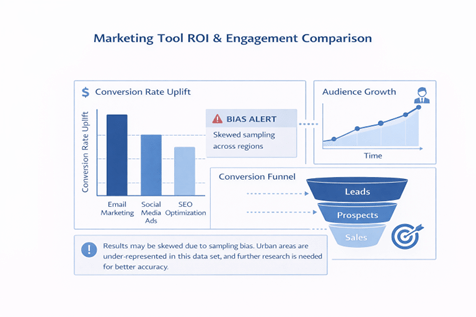
Too many small teams fall into the “spend more for visible ads” trap. Real success in marketing comes from insight, agility, and tight feedback loops. Tools that offer deep audience insights, predictive behavior analysis, and automated optimization allow small businesses to out‑think competitors who are only increasing budget. Tools like Google Analytics 4, HubSpot CRM, and SEMrush provide multi‑layered data analysis that turns raw numbers into strategic decisions. According to Harvard Business Review, companies that align analytics with business strategy grow faster and more sustainably.
The ROI Edge: Measuring What Matters in Marketing Digital
Understanding results is where marketing digital separates itself from legacy tactics. It’s no longer enough to post ads and hope; small businesses must measure which channels produce sales, leads, and retention. Tools with robust attribution modeling reveal which campaigns actually drive growth and which are wasting budget. Google Analytics 4 offers cross‑platform tracking once only available to enterprise clients, while platforms like Mixpanel and Heap allow teams to analyze user behavior deeply. McKinsey reports that data‑driven companies are significantly more likely to acquire and retain customers. Small teams equipped with measurement insights can invest in tactics that deliver measurable returns rather than vanity metrics.
Automation Is the New Marketing Department
How AI Is Replacing the Need for Headcount
Small businesses don’t have luxury of large teams, which is why automation is revolutionary. Tools equipped with AI handle repetitive tasks once done by full‑time staff. From lead scoring to personalized messaging, AI reduces human workload while increasing efficiency. IBM observes that AI adoption in marketing leads to higher engagement rates and reduced operational costs. Automation platforms can trigger follow‑ups, segment audiences, personalize content, and even predict churn. This transforms marketing from tactical execution to strategic orchestration. Those who resist this shift will be outpaced by competitors using automation to deliver tailored experiences at scale.
Top Marketing Digital Automation Tools
- HubSpot Marketing Hub – Automated nurture campaigns + CRM integration
- Mailchimp – AI‑augmented email sequencing and list segmentation
- Zapier – Connects apps and automates repetitive workflows
- ManyChat – Chatbot automation for Facebook and Instagram
- ActiveCampaign – Predictive actions through AI‑driven segmentation
From Email to Chatbots: Smarter, Faster Conversions
Automation isn’t about saving time only; it’s about converting more prospects into customers. AI‑driven chatbots can answer FAQs, qualify leads, and schedule sales calls without human intervention. Email platforms with smart send‑time optimization improve open rates by learning user behavior patterns. A strategic mix of automated messaging channels shifts communication from broad broadcast to tailored journeys, a must in marketing digital where consumer expectations are high and attention spans low.
Social Media Tools Are Leveling the Playing Field in Marketing
Engagement at Scale Without the Overhead
Social media used to favor big budgets and celebrity influencers. Today’s tools let small teams automate, analyze, and optimize their presence with precision. Scheduling platforms increase productivity, while analytics reveal what content actually drives engagement and conversions. The World Economic Forum highlights that brands optimizing content based on analytics see dramatic increases in engagement. Small businesses can A/B test posts, identify peak posting times, and repurpose top‑performing content without hiring a full team. This is marketing digital evolution in action; smart, data‑backed strategies that maximize every minute spent online.
Social Engagement Exemple
| Platform | Followers | Engagement Rate | Top Content | Best Posting Time |
| 12,000 | 4.8% | Reels | 6 PM | |
| 8,500 | 3.2% | Videos | 7 PM | |
| 3,200 | 5.1% | Articles | 12 PM | |
| TikTok | 15,000 | 8.9% | Short Clips | 5 PM |

Scheduling vs Real‑Time: The Strategic Dilemma
There’s a heated debate in marketing digital about scheduling versus real‑time interaction. Scheduling boosts efficiency and consistency, but real‑time engagement builds community and trust more quickly. Tools like Hootsuite and Buffer are scheduling staples, while real‑time platforms such as Sprout Social unify inboxes and social listening for proactive engagement. The smartest teams blend both: automated scheduling for consistency and real‑time responses for authenticity. Those who master this duality build stronger brand loyalty while maintaining workflow efficiency.
SEO and Content Tools Drive Long‑Term Growth
Why Blogging Isn’t Dead It Just Evolved
Contrary to rumors, blogging remains foundational in marketing because content builds trust and authority. What has changed is the expectation for SEO optimized, AIrefined content. Tools that analyze keywords, competitor content, and search intent empower small businesses to produce content that ranks and converts. Platforms like Ahrefs and SEMrush provide keyword difficulty scoring and competitive gap analysis, helping teams craft strategic content plans. Data from SEMrush shows that content targeted with strong SEO insights achieves sustained organic traffic growth.
SEO Tool Comparison
| Tool | Keyword Research | Competitive Analysis | Pricing | Best For |
| SEMrush | Excellent | Excellent | $$ | Full SEO suite |
| Ahrefs | Excellent | Very Good | $$ | Backlink & keyword focus |
| Moz | Very Good | Good | $ | Local SEO |
| Ubersuggest | Good | Good | $ | Budget SEO |
| Surfer SEO | Good | Limited | $$ | On‑page content optimization |
AI Writing Tools: Productivity or Plagiarism?
AI content generators are a double‑edged sword in marketing digital. They enhance productivity dramatically, but they can also produce generic or low‑value text if not guided properly. The controversy is whether AI writing dilutes brand voice. The answer: AI must be used as a co‑pilot, not autopilot. Tools like Jasper and Writesonic speed content production while human strategists ensure message authenticity. According to MIT Technology Review, integrating AI with human oversight yields the strongest creative outcomes. When used wisely, AI accelerates content creation without sacrificing quality or brand differentiation.
Analytics Is the CEO of Marketing Strategy
Attribution Models: Truth or Illusion?
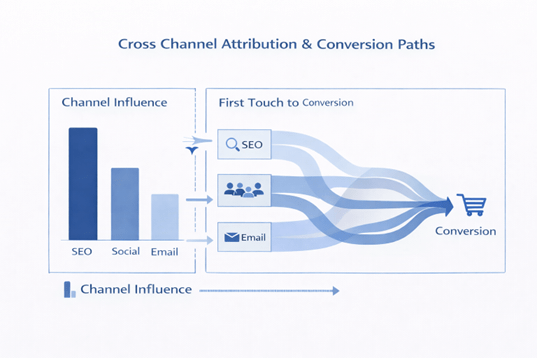
Attribution modeling is one of the most controversial topics in marketing. Do last‑click models mislead strategy? Do first‑touch models oversimplify? The truth is no single model reveals everything. Advanced analytics tools allow small teams to compare multiple attribution frameworks and understand customer journeys more accurately. Businesses that leverage multi‑touch attribution can allocate budget strategically rather than based on misleading assumptions. Deloitte research shows that companies with mature analytics outperform competitors by a significant margin. Analytics turns raw data into strategic decisions that drive growth.
Beyond Google Analytics: What Small Businesses Miss
Many small businesses use Google Analytics without tapping its full power or augmenting with specialized tools. Heatmap solutions like Hotjar reveal how users physically interact with pages, while CRM‑linked analytics show revenue outcomes tied to behavior. Combining behavioral data with revenue funnels breaks silos and reveals actionable insights. Small business marketing leaders that adopt hybrid analytics strategies outperform those stuck in single‑tool mindsets. The result is smarter spend, clearer priorities, and faster growth cycles.
All‑in‑One Marketing Platforms: Efficient or Overrated?
The Temptation of HubSpot, Zoho & the Rest
All‑in‑one platforms promise unified dashboards, automated workflows, and one login for every task. For small businesses, this simplicity is seductive. Tools like HubSpot and Zoho centralize CRM, email, social, and analytics. But consolidation comes with tradeoffs, complexity and higher cost. While unified platforms reduce the need for multiple subscriptions, they can lock teams into rigid workflows that don’t adapt well as needs evolve. Small businesses must evaluate whether integration is worth sacrificing best‑in‑class flexibility.
Pros and Cons of All‑in‑One Marketing Platforms
Pros:
- Centralized data and dashboards
- Reduced app fragmentation
- Unified reporting for teams
Cons:
- Higher cost for advanced features
- Less flexibility than specialized tools
- Platform dependency risk
When Integration Backfires: The Tool Overload Trap
While integration sounds ideal, it can backfire when tools force businesses into convoluted workflows. Too many features overwhelm lean teams and obscure what actually drives results. A modular strategy like choosing best‑in‑class tools for analytics, SEO, social, and automation, then integrating selectively only where it adds value; preserves flexibility. McKinsey warns that overcomplicated stacks reduce agility and inflate costs. Small businesses must ask not “what’s included” but “what accelerates growth fastest.”
Why AI‑Driven Marketing Is the Only Future
After surveying the landscape of marketing digital tools, one truth emerges: AI‑driven systems aren’t merely advantageous, they define the next era of competitive advantage. The clash is not between tools but between mindsets: those who embrace AI to automate, personalize, and predict versus those clinging to outdated processes. Small businesses that harness AI outperform peers on engagement, efficiency, and ROI. The argument that automation replaces creativity is false; AI amplifies human strategic thinking by removing monotony. The tools listed here: from analytics to content, social, and customer journey platforms, are not isolated utilities but interconnected engines of strategic growth. For small businesses, mastering this ecosystem is not optional; it’s the blueprint for thriving in disruption. The future belongs to those who act decisively and use marketing as a strategic weapon powered by AI and data‑driven decision making.
References
- How to Make Better Decisions with Analytics — Harvard Business Review
- The Data-Driven Enterprise of 2025 — McKinsey
- How AI Can Supercharge Your Marketing — IBM
- Generative AI Can Help. But at What Cost? — MIT Technology Review
- Winning with Digital Marketing in the Post-Cookie Era — Deloitte
- Why Data-Driven Content Marketing Wins — World Economic Forum
- Loyalty Programs Are Dying! What Smart Marketing Is Doing Instead? | H-in-Q