


Data or Drama? The DEI Dilemma in HR Technology
The adoption of HR technology has accelerated across the world as companies scramble to prove their commitment to inclusion. People‑Analytics tools promise to transform DEI from a feel‑good side commitment into measurable outcomes. The question on the table: is this transformation real or just polished corporate theater where dashboards replace real culture? As businesses lean on HR technology to manage diversity, equity and inclusion (DEI), they risk mistaking numbers for change. The coming decade will reveal whether these tools embed actual fairness or merely bake in the same inequalities under the guise of progress.
How HR Technology Is Reframing DEI Accountability
The Rise of People Analytics in Measuring Inclusion
HR technology now equips organizations with People Analytics that convert workforce composition, hiring rates, promotion rates, pay equity data, and attrition trends into hard metrics. This quantification gives leaders a way to track inclusion across gender, ethnicity, disability status, and more. theoretically enabling data‑driven DEI accountability. According to one global advisory firm, DEI Analytics “are becoming measurable and actionable,” positioning HR as a strategic partner rather than an afterthought. (LinkedIn)
Inclusion Metrics Across Industries Using HR Technology
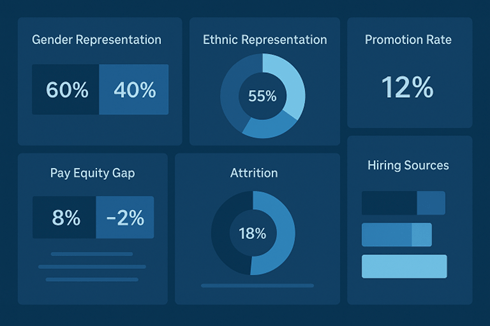
People Analytics allows organizations to compare representation across departments and levels, monitor pay equity and assess promotion pathways. This makes structural bias harder to hide and creates pressure to act on DEI commitments.
People Analytics or Performance Propaganda?
When HR Analytics Becomes a PR Tool
At their worst, DEI dashboards serve more to showcase optics than to drive real change. Some corporations use glossy HR analytics reports more like marketing collateral than as instruments for transformation. Such performative use hides the deeper problem: metrics without tangible outcomes.
Real vs. Reported DEI Outcomes in Major Corporations
| Company / Organization | Reported DEI Metrics (on dashboards) | Real‑world DEI Outcomes (hiring, retention, inclusion) |
| Example Corp A | Gender balance 50/50; Ethnic diversity +20% in 2 years | No significant change in retention among underrepresented groups; attrition remains high |
| Example Org B | Pay‑equity gaps < 5%; Promotions equitable | Employee feedback reveals persistent bias in team assignments and evaluations |
| Example Firm C | High representation in entry-level roles | Very low representation of underrepresented groups at senior levels |
This pattern reveals the danger: dashboards can mask persistent inequality. When organizations prioritize reported metrics over lived experience, DEI becomes a corporate theater managed by optics rather than lived transformation.
Can AI-driven HR Technology Neutralize Human Bias?
Algorithmic Fairness vs Institutional Inertia
AI-powered HR technology can help overcome human bias during hiring, promotion, or performance evaluation. For instance, algorithms designed to value candidate diversity have increased demographic representation without sacrificing candidate quality. Research from a leading institution shows that AI that values “exploration” (i.e. non‑traditional backgrounds) fosters more diverse, often higher‑quality candidate pools. (MIT Sloan)
Key Biases AI Can Detect in HR Processes:
- Unbalanced hiring pools skewed by prior biases (e.g. overrepresentation of certain demographics)
- Resume‑screening bias linked to traditional credentials filtering out marginalized candidates
- Pay inequity hidden behind vague job grades or salary bands
- Unequal promotion rates unlinked to performance, but to subjective evaluations
- Disproportionate attrition in under‑represented groups due to lack of inclusion post-hire
By detecting these structural imbalances, AI‑driven People Analytics offers a path toward equitable decisions. However, success depends on design: faulty data or bias in training can replicate injustice.
The Ethics of Surveillance: People Analytics or People Policing?
Tracking Inclusion Without Breaching Trust
As companies lean heavier on data collection; from hiring to internal mobility and even engagement. People Analytics risks becoming intrusive. Monitoring communication patterns, sentiment, or performance metrics might betray employees’ trust, turning supportive analytics into invasive surveillance.
Employee Sentiment vs Monitoring Tools Usage
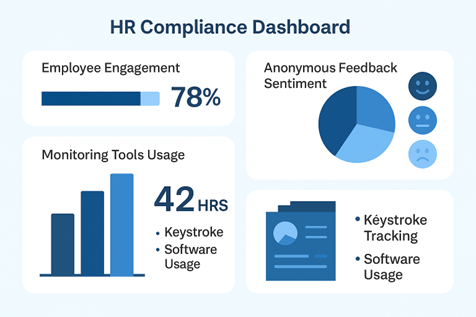
If organizations deploy such dashboards without transparency, they may inadvertently create an environment where employees feel watched. Transparency, clear consent, and anonymization are essential to ensure that HR technology helps inclusion rather than policing behavior.
HR Analytics in Practice: Empowerment or Disempowerment?
When Metrics Replace Dialogue
The essence of DEI lies not only in who sits in the room but how they feel, speak, and grow. Over-reliance on HR analytics can reduce DEI to numbers, replacing meaningful dialogue with quarterly reports. When dashboards become the end rather than the means, HR technology may disempower employees.
Impact of DEI Analytics on Employee Engagement and Inclusion
| Benefit | Risk of Over‑reliance |
| Transparency in representation and pay equity | Data becomes an excuse to skip listening to underrepresented voices |
| Objective hiring and promotion decisions | Metrics overshadow qualitative experiences of inclusion or micro‑aggressions |
| Ability to track long-term progress | Short-term metrics become a shield against deeper cultural change |
| Predictive analytics to mitigate turnover or inequality | Over‑monitoring can weaken trust and morale |
Without combining metrics with listening sessions, feedback loops and inclusive decision‑making, analytics risks flattening human complexity. DEI becomes a quarterly KPI.
The Corporate Incentive Problem in HR Technology
Inclusion vs. Investor Optics
The forces shaping HR technology are not purely moral. Many DEI tech tools are built to appeal to investors and shareholders, offering metrics that look good on investor decks not necessarily equitable workplaces. Commonly prioritized features include pay‑equity reports, representation targets, compliance tracking, and diversity quotas all attractive for branding and valuation purposes.
Top 5 Investor‑Driven Features in DEI Tech Platforms
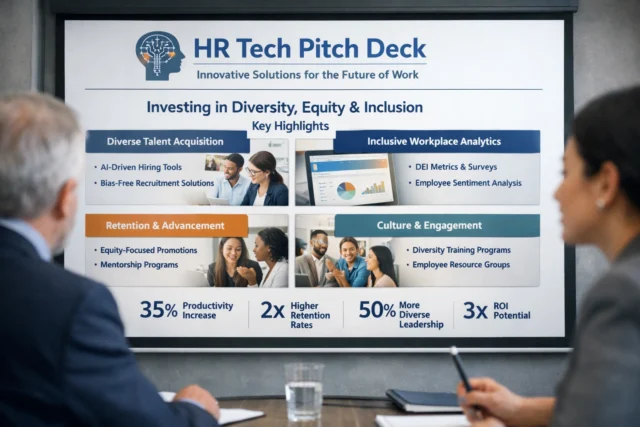
- Real-time representation metrics by gender, race, disability status
- Pay‑equity dashboards customizable by role and geography
- Turnover and retention analytics segmented by demographic group
- Automated compliance and reporting tools for regulatory disclosures
- Candidate‑pool diversity monitors and quota-based hiring tools
These features often focus on “what can be measured easily.” Investor returns demand clear, comparable metrics and not necessarily deeper inclusion or equitable opportunity. As a result, HR technology becomes a tool for optics, not for genuine transformation.
Redesigning HR Technology for Real Inclusion
From Dashboards to Dialogue
For HR technology to truly serve DEI, organizations must shift from metrics-first to people-first design. Tools must include participatory design, transparent data usage, and feedback loops that respect employee voice.
- Build analytics dashboards with employee involvement, ensuring meaningful metrics that reflect lived experience (e.g., belonging, psychological safety, qualitative feedback).
- Implement clear consent and privacy safeguards around data collection, particularly for sensitive identity or demographic data.
- Combine quantitative People Analytics with regular qualitative forums; town halls, focus groups, anonymous surveys to surface issues numbers can’t capture.
- Invest in bias‑mitigation and fairness auditing for AI models, including ongoing oversight, review processes, and representation in data science teams.
This shift transforms HR technology from a scoreboard to a tool for empowerment, restoring dialogue and agency to the workforce.
AI, Accountability, and the Future of HR Technology
Technology holds immense power to reshape human resources. HR technology and People Analytics can (if designed and managed with integrity) offer real pathways to inclusion, fairness, and structural change. However, when companies settle for polished dashboards for external optics while ignoring internal culture, People Analytics becomes corporate theater. The future belongs to organizations that embed transparency, employee voice, and ethical design at the core of their HR technology strategy. Embracing AI means choosing efficiency, responsibility and building workplaces where inclusion is real, not performative.
References
How AI Can Improve Diversity and Inclusion in Hiring – MIT Sloan Management Review
DEI Metrics That Matter: From Tracking to Impact – Deloitte
Using People Analytics to Drive DEI Outcomes – Harvard Business Review
How to Balance Data Privacy with Employee Trust in HR Tech – World Economic Forum
The Power—and Limits—of HR Analytics – McKinsey & Company
HR Technology and Employee Retention in the Age of Data – H-in-Q