


Strategy at War with Intuition
Market Research sits at the center of one of the most polarizing debates in modern business. On one side stand executives who view Market Research as the intellectual backbone of strategy, the discipline that converts uncertainty into competitive clarity. On the other side are leaders who see Market Research as an expensive ritual that delays action, inflates budgets, and tells companies what they already know. This conflict is not academic. It determines how capital is allocated, how products are designed, and how risk is tolerated. As markets fragment and customer behavior accelerates, the tension between intuition-led leadership and data-driven decision making intensifies. Market Research is no longer just a function. It is a philosophical stance on how organizations confront complexity.
Research on decision making published by Harvard Business Review consistently shows that leaders who dismiss evidence-based insight amplify cognitive bias rather than strategic clarity. The real question is not whether Market Research matters, but whether businesses are capable of using it with strategic discipline in an AI-powered economy.
Market Research as the Backbone of Modern Business Strategy
Why Market Research Shapes Competitive Advantage
Market Research operates as strategic infrastructure, not tactical support. When executed correctly, it aligns positioning, pricing, and product development with verified market signals instead of executive assumptions. Through disciplined data collection, organizations identify unmet needs, emerging segments, and behavioral shifts before competitors react. Long-term performance insights from McKinsey’s growth and strategy research demonstrate that companies grounding strategy in customer and market insight outperform peers on sustainable growth.
Strategic advantages enabled by Market Research:
- Clear segmentation rooted in real demand patterns
- Evidence-based prioritization of growth initiatives
- Reduced dependency on internal bias and hierarchy
Critics argue that visionary leaders do not need Market Research. History proves otherwise. Sustainable advantage emerges when intuition is tested against structured insight, not when it operates in isolation.
Market Research and Strategic Risk Reduction
Every strategic decision carries risk. Market Research does not eliminate uncertainty, but it reframes it. Instead of betting blindly, companies quantify exposure, explore scenarios, and stress-test assumptions. Strategic risk perspectives published in Deloitte Insights show that organizations embedding research into decision governance reduce the likelihood of large-scale strategic failure.
Table: Strategy Outcomes With and Without Market Research
| Strategic Dimension | Without Market Research | With Market Research |
| Market entry | Assumption-driven | Evidence-informed |
| Resource allocation | Politically influenced | Strategically justified |
| Long-term planning | Reactive | Anticipatory |

Market Research vs Speed: Strategic Insight or Operational Drag
Market Research Accused of Slowing Innovation
The most common indictment of Market Research is speed. Detractors claim it replaces momentum with meetings and turns innovation into bureaucracy. In fast-moving markets, they argue, waiting for research validation equals surrendering first-mover advantage. This tension between experimentation and evidence is a recurring theme in innovation coverage from MIT Technology Review.
This criticism resonates in organizations where Market Research is detached from execution. When insights arrive after decisions are already made, frustration is justified. The failure, however, lies in governance, not in Market Research itself.
How Market Research Enables Faster, Smarter Decisions
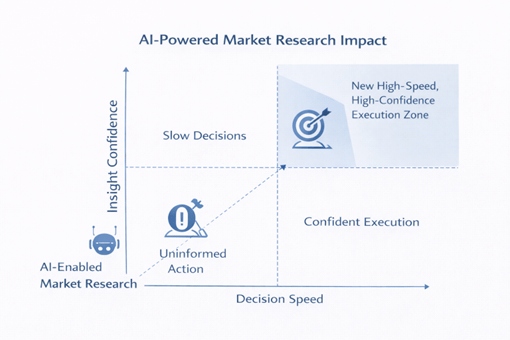
When integrated into decision workflows, Market Research accelerates action. AI-supported Market Research compresses feedback cycles, enabling leaders to act with confidence instead of hesitation. Enterprise AI research published by IBM Think shows that decision velocity improves when analytics and insight generation are embedded upstream. Speed without direction creates waste. Speed guided by insight compounds advantage.
Data Collection in Market Research: Asset or Liability
The Data Collection Obsession Inside Market Research
Market Research often fails because of excess, not absence. Endless data collection bloats costs and obscures clarity. Organizations confuse volume with value, accumulating datasets without strategic intent. Global data governance discussions hosted by the World Economic Forum warn that data abundance without prioritization degrades executive judgment.
Unfocused data collection produces noise. It overwhelms decision makers and erodes trust in insights. At that point, intuition reasserts itself, not because it is superior, but because it is simpler.
Intelligent Data Collection as Market Research Power
Modern Market Research replaces hoarding with precision. AI enables targeted data collection aligned with specific decisions. The goal is not to know everything, but to know what matters. This shift toward decision-centric analytics reflects advanced analytics operating models discussed in McKinsey’s analytics insights.
Table: Traditional vs Intelligent Data Collection
| Approach | Traditional Model | AI-Driven Model |
| Scope | Broad and unfocused | Decision-specific |
| Speed | Slow | Continuous |
| Strategic value | Diffuse | Concentrated |
Market Research and Customer Satisfaction: Signal or Noise
Customer Satisfaction Metrics That Mislead Strategy
Customer satisfaction is often treated as sacred. Yet satisfaction scores frequently reward incrementalism and punish disruption. Leaders argue that listening too closely to customers anchors strategy in the present instead of shaping the future.
This criticism exposes a misuse of Market Research, not a flaw in the discipline. Satisfaction metrics become dangerous when interpreted literally rather than strategically. Harvard Business Review.
Using Market Research to Decode Real Customer Satisfaction
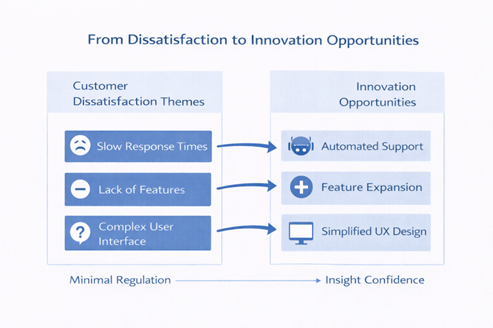
Advanced Market Research reframes customer satisfaction as behavioral intelligence. Instead of chasing approval, it uncovers friction, unmet expectations, and latent demand. AI-driven customer analytics capabilities are a core focus in research published by IBM Think.
Market Research in the AI Era: Reinvention or Redundancy
Claims That AI Makes Traditional Market Research Obsolete
The argument that AI eliminates the need for Market Research is rooted in a fundamental misunderstanding of what Market Research actually does. Real-time data streams, behavioral tracking, and automated analytics create the illusion that insight emerges automatically. In reality, these systems generate signals without context. AI can surface correlations, but it cannot determine strategic relevance on its own. Organizations that abandon Market Research in favor of raw analytics often mistake activity for understanding. They react faster, but not smarter. MIT Technology Review,
Without Market Research to frame hypotheses, define decision criteria, and translate patterns into strategy, AI becomes a high-speed engine driving in the wrong direction. The result is over-optimization of short-term behavior at the expense of long-term positioning.
AI-Driven Market Research as Strategic Amplifier
When AI and Market Research are integrated, the discipline evolves from retrospective analysis to strategic foresight. AI expands the scale and speed of data collection, while Market Research imposes structure, intent, and accountability. Together, they enable scenario modeling, early detection of weak signals, and continuous learning loops. This combination shifts Market Research from a periodic activity to a living system embedded in strategy execution. World Economic Forum.
Organizations that adopt AI-driven Market Research do not simply understand markets better. They anticipate them. This is not automation replacing human judgment. It is amplification. AI accelerates insight generation, but Market Research ensures those insights shape decisions that matter.

The Cost Debate: Is Market Research an Expensive Illusion?
Why Market Research Is Labeled a Budget Drain
Market Research earns its reputation as a cost center when it operates without decision ownership. Reports are produced, circulated, and archived without influencing action. This insight-to-action gap is a recurring theme in strategy execution research published by Deloitte Insights.
In these environments, Market Research becomes performative compliance rather than strategic input. Executives see invoices without impact and conclude the discipline is inefficient. This critique gains traction during downturns, when budgets tighten and patience disappears. Yet the problem is rarely the cost of Market Research itself. It is the absence of a clear link between insight and authority. When no one is accountable for acting on findings, even the most accurate research appears wasteful.
Market Research as a High-ROI Strategic Infrastructure
When governed correctly, Market Research functions as strategic infrastructure rather than discretionary spending. It prevents misaligned investments, exposes flawed assumptions before they scale, and sharpens capital allocation. AI-driven efficiency gains are documented across analytics transformation case studies from McKinsey. The return is not measured in reports delivered, but in failures avoided and opportunities seized earlier than competitors.
AI further compresses cost structures by automating repetitive tasks, allowing Market Research teams to focus on synthesis and strategic interpretation. In this model, Market Research pays for itself by reducing uncertainty where it is most expensive: market entry, product launches, and long-term bets. The illusion is not that Market Research is costly, but that strategy can afford to operate without it.
When Market Research Fails and When It Dominates
Organizational Misuse of Market Research
Market Research fails predictably. It fails when insights are filtered to protect internal narratives, when inconvenient findings are ignored, and when research teams lack proximity to decision makers. Market Research In these organizations becomes decorative. Harvard Business Review
Over time, researchers learn to deliver safe conclusions, and the discipline loses credibility. Skepticism then becomes self-fulfilling. Leaders stop trusting Market Research because they have trained it to lie politely. Failure here is cultural, not methodological.
Structuring Market Research for Strategic Dominance
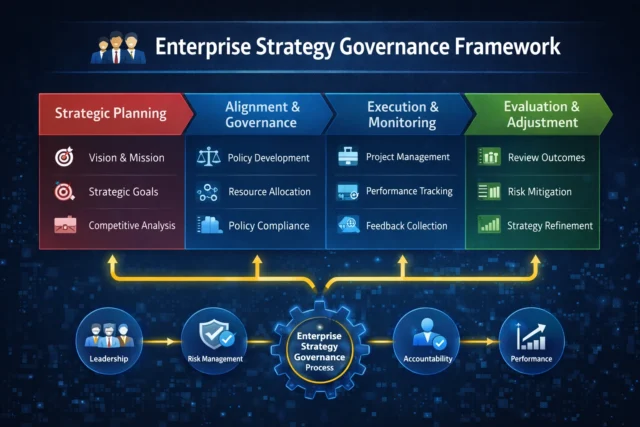
Market Research dominates when it is structurally inseparable from decision making. Leading organizations define which strategic decisions require Market Research input and enforce that dependency. This model aligns with strategic resilience frameworks advanced by the World Economic Forum.
AI-enabled platforms deliver insights continuously, but authority remains human and explicit. Research leaders sit at the strategy table, not downstream from it. Accountability is clear: insights trigger decisions, and decisions are traced back to insights.
Market Research becomes a competitive weapon that does not slow organizations down but disciplines them. And disciplined strategy consistently outperforms improvisation, regardless of how confident it sounds.
Market Research or Strategic Suicide
The debate is settled by outcomes, not ideology. Organizations that abandon Market Research do not become faster or bolder. They become louder and less accurate. Market Research is not an insurance policy against failure, but it is the only scalable defense against strategic blindness. In an AI-driven economy, the choice is stark. Companies either modernize Market Research into an intelligent, decision-centric system or surrender strategy to intuition and internal politics. The accusation that Market Research is a waste of time collapses under scrutiny. Waste comes from misuse, not from insight. Leaders who frame Market Research as optional reveal a deeper discomfort with accountability. Markets reward clarity, not confidence. The future belongs to organizations that weaponize Market Research with AI, discipline, and decisiveness. Everything else is improvisation disguised as leadership.
References
- Harvard Business Review – Evidence-Based Management
- McKinsey – Featured Insights on Growth, Strategy, and Analytics
- Deloitte Insights – Strategy and Risk Management
- IBM Think – AI, Analytics, and Decision Intelligence
- MIT Technology Review – Artificial Intelligence
- World Economic Forum – Data, AI, and Organizational Resilience
- Market Research Customer Satisfaction: Truth or Visual Lies? – H-in-Q