


The Strategic Rise of Market Research in the Data Economy
The modern enterprise runs on insight, not instinct. That transformation has elevated Market Research from a tactical support function into a strategic engine of business intelligence. Companies now compete through superior understanding of customers, faster data collection, and deeper interpretation of consumer behavior.
Yet a new power dynamic has emerged. Data scientists, armed with machine learning and predictive models, increasingly dominate analytics conversations inside corporations. Their salaries often outpace traditional roles, raising a provocative question. Is Market Research losing the compensation battle, or is the profession simply evolving into something more powerful?
The debate reflects a broader shift across industries. One camp argues that algorithms now define competitive advantage. The other insists that Market Research remains the only discipline capable of translating data into human context and actionable strategy. Research highlighted in
Harvard Business Review’s analysis of data-driven organizations shows that companies leading in analytics outperform competitors across multiple industries.
The reality lies in a high-stakes intersection where AI amplifies insight and reshapes professional value.
Market Research in the Data Economy: Strategic Intelligence vs Algorithmic Power
Why Market Research Became a Strategic Business Function
Over the past decade, Market Research moved from the margins of marketing departments into the core of corporate strategy. Executives now demand real-time understanding of consumer behavior, brand perception, and evolving expectations around customer satisfaction.
According to insights frequently discussed in
Harvard Business Review research on customer insights, organizations that prioritize structured insight outperform competitors in innovation and product relevance. Market Research delivers that advantage by translating fragmented signals from data collection into actionable narratives.
Key drivers behind this shift include:
- Explosion of consumer data sources
- Increasing competition for customer attention
- Demand for measurable customer satisfaction outcomes
- AI systems that amplify research insights

How AI and Automation Are Transforming Market Research Roles
Automation has radically expanded the operational scope of Market Research. AI tools now process survey responses, behavioral signals, and social listening data faster than traditional research workflows ever could.
This transformation does not eliminate Market Research expertise. It increases its strategic value. Automated data collection creates massive information streams that still require interpretation grounded in human psychology and market context.
Research developments discussed in
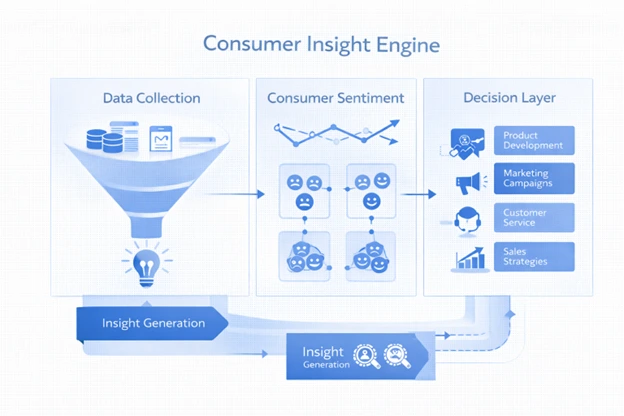
MIT Technology Review’s coverage of AI in business analytics illustrate how artificial intelligence accelerates insight discovery across industries.
Research leaders now oversee hybrid workflows that combine:
- AI-driven analytics
- behavioral data collection
- predictive modeling
- qualitative consumer insight
Market Research Salary Structures vs Data Science Compensation
The Traditional Market Research Career Compensation Model
Historically, compensation in Market Research followed a structured corporate hierarchy. Entry analysts advanced through roles such as research manager, senior insight leader, and eventually director of insights.
Compensation depended on factors such as:
- industry sector
- scope of data collection operations
- leadership responsibilities
- impact on customer satisfaction strategies
The traditional salary structure often looked like this:
| Role | Core Focus | Strategic Impact |
| Market Research Analyst | Data analysis and surveys | Tactical insight |
| Market Research Manager | Research design and interpretation | Product and marketing decisions |
| Director of Insights | Organizational intelligence strategy | Corporate growth initiatives |
This model prioritized business interpretation rather than algorithmic engineering.
Why Data Scientists Command Higher Salaries Than Market Research Managers
Data scientists often earn higher salaries because their expertise directly powers automation, prediction, and large-scale data infrastructure.
Industry reports such as
McKinsey’s research on analytics and AI transformation highlight how organizations increasingly depend on machine learning systems to optimize decisions.
However, data scientists rely heavily on structured data collection pipelines and contextual interpretation. Without strategic framing from Market Research, predictive models often lack business relevance.
The compensation gap exists because companies perceive:
- data science as a technical scarcity
- Market Research as a strategic function rather than engineering
Yet that perception is rapidly shifting as companies recognize the need for integrated intelligence.
Market Research vs Data Science Skills: Strategic Insight vs Technical Precision
Human Insight and Customer Understanding in Market Research
At its core, Market Research is a discipline focused on understanding human behavior. The field specializes in transforming raw data collection into meaningful interpretations about how people think, decide, and evaluate brands.
This perspective becomes critical when organizations attempt to improve customer satisfaction. Algorithms can detect patterns, but only Market Research interprets motivations behind those patterns.
Core strengths include:
- behavioral interpretation
- cultural analysis
- consumer psychology
- strategic storytelling

Algorithmic Decision Power Beyond Traditional Market Research
Data science introduces a different kind of influence. Instead of interpreting behavior after it occurs, predictive models anticipate future outcomes.
Technological developments described in
IBM’s insights on AI and data analytics demonstrate how machine learning models uncover hidden patterns within massive datasets.
Key algorithmic capabilities include:
- Predictive demand forecasting
- Automated sentiment analysis
- Customer churn prediction
- Real-time behavioral segmentation
This predictive capability changes the role of Market Research dramatically.
Market Research and Data Collection: The Foundation of Competitive Intelligence
Why Data Collection Remains the Core Strength of Market Research
No insight exists without structured data collection. Surveys, behavioral tracking, interviews, and ethnographic studies form the foundation of Market Research.
These processes capture signals that raw digital data often misses. Emotional reactions, expectations around customer satisfaction, and brand perception require carefully designed research frameworks.
Modern Market Research teams manage complex data ecosystems that include:
- survey platforms
- consumer panels
- behavioral tracking tools
- social listening environments
When Data Science Turns Raw Data Collection into Competitive Advantage
While Market Research generates structured insights, data science multiplies their analytical scale.
Insights discussed in
McKinsey’s article on advanced analytics in organizations show how companies convert raw data into predictive intelligence.
| Stage | Market Research Role | Data Science Role |
| Data Collection | Design surveys and experiments | Integrate large-scale data pipelines |
| Analysis | Interpret consumer behavior | Identify statistical patterns |
| Prediction | Identify strategic implications | Forecast behavioral trends |
| Strategy | Guide business decisions | Optimize algorithmic models |
Market Research and Customer Satisfaction Intelligence
Market Research as the Voice of the Customer
Organizations seeking to improve customer satisfaction depend heavily on Market Research to capture the authentic voice of the consumer. Through structured data collection, surveys, behavioral tracking, and sentiment analysis, companies gain direct access to customer expectations, frustrations, and evolving preferences. Insights highlighted in the World Economic Forum’s research on customer-centric innovation show that organizations embedding consumer insights into strategic decision-making consistently accelerate growth, strengthen brand loyalty, and adapt faster to market change. Market Research therefore enables companies to detect shifts in expectations before competitors even recognize them.
Image suggestion: Customer experience survey analysis session
Alt text: Market Research analyzing customer satisfaction trends
Predictive Models Transforming Customer Satisfaction Analysis
AI has transformed how companies analyze customer satisfaction signals across the entire customer journey. Instead of reviewing feedback months later through traditional reports, predictive systems continuously monitor sentiment and identify early warning signs of declining satisfaction. Advanced analytics platforms combine behavioral data collection, transaction patterns, and feedback signals with machine learning models. This integration allows organizations to anticipate dissatisfaction, detect emerging issues faster, and proactively improve customer experiences before negative perceptions spread.
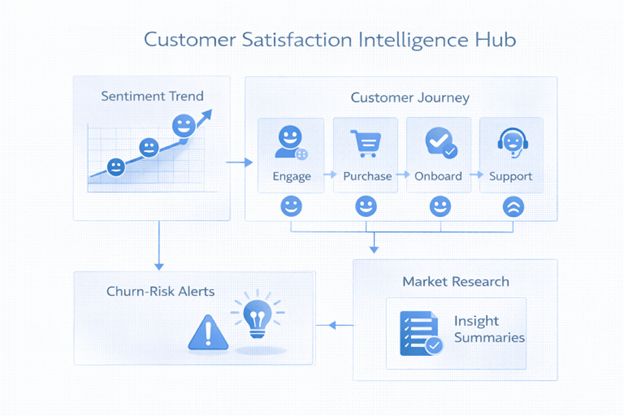
Research by Deloitte on AI-driven customer experience analytics highlights how organizations now monitor satisfaction signals in real time.
The Future of Market Research Careers in an AI-Driven Economy
AI Augmentation in Market Research Workflows
AI is not replacing Market Research. It is significantly expanding its reach and strategic impact across organizations. Automated survey analysis, behavioral pattern detection, and advanced sentiment classification now process massive volumes of data collection in real time. These technologies accelerate insight generation, enabling research teams to identify emerging trends faster and support smarter business decisions.
Studies from Deloitte’s research on the future of analytics work show that hybrid analytics roles will dominate future decision environments.
Research professionals increasingly operate as strategic intelligence architects, combining:
- AI analytics tools
- behavioral data collection
- market interpretation
- business strategy
The Hybrid Role: Market Research Strategist Meets Data Scientist
The highest-value insight leaders already combine advanced technical expertise with strong strategic thinking. Modern organizations increasingly rely on professionals capable of bridging Market Research, analytics, and business strategy. This hybrid profile allows companies to transform raw data collection into forward-looking intelligence that drives growth and improves customer satisfaction. As AI becomes central to decision-making, the emerging role includes responsibilities such as:
- AI-assisted Market Research design
- Predictive analytics integration
- Advanced data collection systems
- Strategic guidance for improving customer satisfaction
The Real Winner of the Pay Battle
Salary comparisons suggest that data scientists frequently earn more than traditional Market Research managers. Yet focusing purely on salary misses the larger transformation occurring across industries.
The future belongs to professionals who combine Market Research expertise with AI-driven analytics. These hybrid roles increasingly command the highest compensation because they control the entire intelligence pipeline. They design data collection, interpret market signals, and guide predictive models that shape strategic decisions.
The pay battle therefore produces a surprising outcome. Data scientists may win individual salary comparisons today. However, Market Research enhanced by AI ultimately becomes the most powerful intelligence discipline inside modern organizations.
The real winners are those who transform data into strategic understanding.
References
Competing on Analytics – Harvard Business Review
Know Your Customers’ Jobs to Be Done – Harvard Business Review
The State of AI in 2023 – McKinsey
How Companies Use Advanced Analytics to Create Value – McKinsey
Artificial Intelligence and the Future of Work – Deloitte
Artificial Intelligence and Customer Experience – Deloitte
Artificial Intelligence Overview – IBM
Artificial Intelligence Topic Hub – MIT Technology Review
Customer Experience and Innovation Insights – World Economic Forum
Read also :
- Market Research Customer Satisfaction: Truth or Visual Lies? – H-in-Q
- Is Market Research Truly Reflecting Consumer Needs or Just Reinforcing Bias? | H-in-Q