

Is ROI the Wrong Compass for Modern Marketing?
ROI (return on investment) has long been the North Star of marketing. It promises clarity, accountability, and evidence of impact. But in the era of social media, algorithmic engagement, and AI-driven automation, this once-reliable metric is now the subject of a fierce internal debate. Is ROI still a sharp tool for steering marketing strategy, or has it become a corporate placebo; measuring movement, not meaning?
In today’s digital economy, where marketing is increasingly shaped by predictive models, real-time data, and ephemeral attention spans, the hunt for ROI can distort priorities. It rewards the visible over the valuable, the immediate over the impactful. Social media, in particular, offers seductive metrics; likes, shares, impressions, that masquerade as returns. But these signals are easy to inflate and hard to correlate with real business growth. If leaders remain obsessed with ROI without evolving its definition, they risk measuring illusions and optimizing into irrelevance.
The Illusion of Precision in ROI-Based Marketing
Why ROI Metrics Fail to Capture the Full Impact of Social Media
At first glance, ROI offers simplicity. It tells executives, “We spent $X and got $Y.” But in social media marketing, this equation is far murkier. Brand storytelling, cultural relevance, and audience sentiment; the true currencies of social platforms, resist neat quantification. ROI can’t capture the value of a viral moment that boosts brand affinity without driving immediate conversions. Nor can it measure the opportunity cost of silence in moments when brands should speak up.
Worse, many brands misuse ROI as a justification tool rather than a strategic guide. The proliferation of attribution tools gives a false sense of certainty. As McKinsey warns, too many marketers chase attribution perfection at the expense of agility and relevance.
The Hidden Costs of Over-Optimizing for ROI in Marketing Digital Campaigns
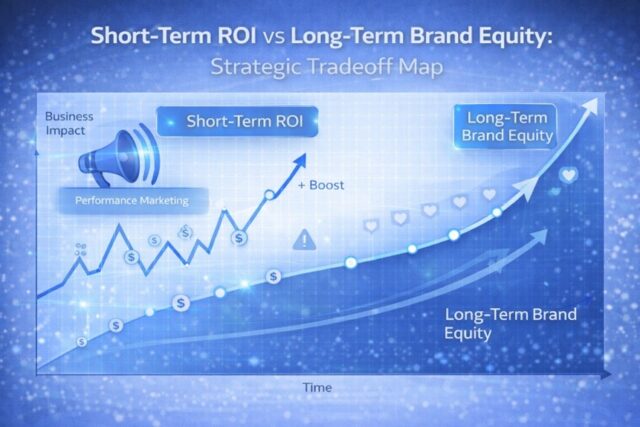
When teams optimize solely for ROI, they’re encouraged to play it safe. That means recycling proven formats, doubling down on paid amplification, and avoiding experimentation. This conservatism stunts innovation. Social media becomes a vehicle for click-throughs, not cultural connection.
Moreover, short-term ROI focus in marketing digital campaigns incentivizes disposable content, ephemeral by design, impactful by accident. Brands start chasing vanity wins rather than cultivating lasting influence. The irony? By chasing ROI, they might actually lower their real return.

ROI Obsession vs Long-Term Brand Growth in Marketing
Brand Equity: The Marketing Asset ROI Ignores
ROI doesn’t know how to value trust. It can’t account for the goodwill a brand earns through sustained, authentic engagement. Brand equity, the intangible force that drives pricing power, customer loyalty, and long-term market share is invisible to ROI models.
This is particularly damaging in marketing, where equity and emotional resonance are everything. By undervaluing brand-building efforts, ROI-focused strategies prioritize the transactional over the transformational. As Harvard Business Review argues, this tunnel vision leads to underspending on upper-funnel efforts where real differentiation begins.
Case Studies Where ROI-Led Marketing Backfired
Consider Pepsi’s infamous Kendall Jenner ad. It was likely A/B tested, optimized, and pushed for virality, yet it catastrophically misread cultural tone, damaging brand equity. Conversely, Nike’s bold campaigns featuring Colin Kaepernick sparked boycotts but ultimately drove brand strength and revenue.
ROI would’ve killed Nike’s campaign before it launched. Brand courage outperformed data-driven caution.
Data Distortion: When Marketing Metrics Mislead
Vanity Metrics vs Value Metrics in Marketing Digital Analysis
A million views mean nothing if they don’t drive behavior. Social platforms reward scale, not substance. But leadership often conflates reach with relevance. In the rush to showcase ROI, marketers may highlight engagement rates that look impressive but say little about strategic outcomes.
Marketing digital reports, padded with such vanity metrics, create a data theater that pleases stakeholders while hiding inefficacy. True value lies in metrics like sentiment change, community growth, and brand mention quality not follower counts or CTRs.
Algorithmic Bias and the False Positives of Social Media Success
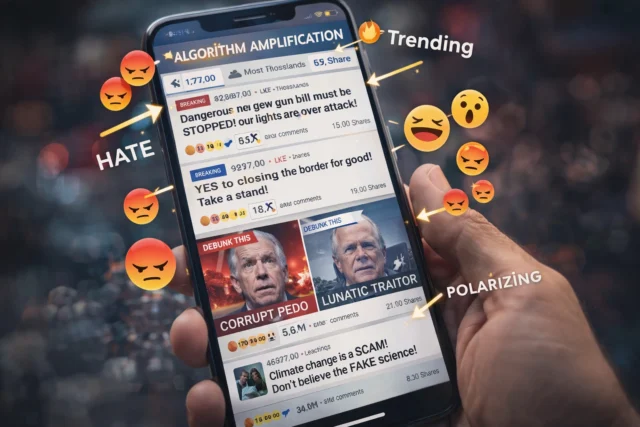
Social media algorithms are not neutral arbiters of success. They amplify what’s provocative, not what’s strategic. A post might go viral because it’s divisive, not effective. Yet ROI calculations don’t care, they see a spike and reward the content.
This creates perverse incentives. Teams double down on what pleases the algorithm, not what builds sustainable brand narratives. As MIT Technology Review notes, algorithmic distortion can lead brands to optimize for machine preferences over human needs.
The Corporate Culture Behind ROI Addiction in Marketing
Executive Incentives That Prioritize ROI Over Innovation
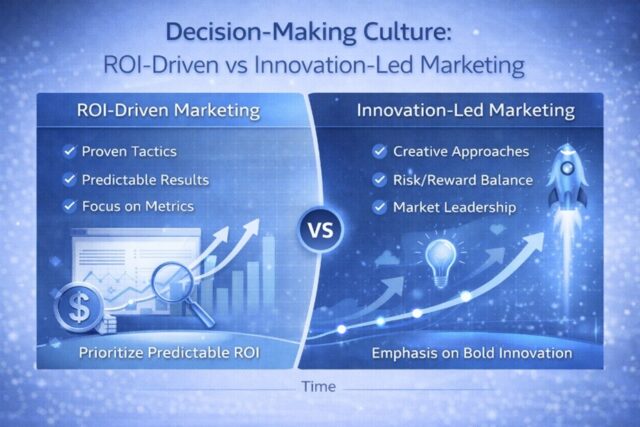
CMOs are often on the clock measured quarterly, expected to deliver measurable gains. ROI gives them a shield, a story to tell the board. But this creates an environment where only the quantifiable survives. Bold, brand-building ideas that take time to pay off are deprioritized.
In marketing, this results in a culture of incrementalism. Teams tweak, test, and tinker but rarely transform. Deloitte’s marketing leadership reports reveal that most C-suites over-index on short-term KPIs, starving long-term strategy.
Fear-Driven Marketing: Why Leaders Settle for Measurable Mediocrity
ROI addiction is often a symptom of corporate fear of failure, of subjectivity, of qualitative thinking. But fear is a poor strategist. It punishes risk-takers and rewards conformists. The result? Marketing that’s mathematically defensible but emotionally forgettable.
Is Marketing ROI Still Relevant in the Age of AI and Automation?
How AI Tools are Redefining What Success Looks Like in Marketing Digital Campaigns
AI doesn’t care about legacy metrics. It’s designed to spot patterns, predict outcomes, and optimize based on future potential not just past performance. In marketing digital environments, AI is already shifting the focus from static ROI to dynamic outcomes like propensity to convert, lifetime value, and emotional resonance.
Smart tools are reframing campaign success: not “did it convert?” but “will it drive cumulative lift?” The future of marketing measurements is anticipatory, not reactive.
Predictive Intelligence vs Historical ROI: Which Should Guide Strategy?
ROI is a rearview mirror. AI-powered models are headlights. Marketers must choose: drive by looking backward or see what’s coming.
IBM’s Watson Advertising tools are enabling real-time optimization based on customer sentiment and behavioral prediction. These tools go far beyond what ROI ever promised—by aligning spend with evolving intent, not static conversion.
Toward Smarter Marketing Metrics: Beyond ROI
Outcome-Based Marketing Models Powered by AI
The next generation of marketing success metrics will prioritize holistic outcomes: influence growth, community health, brand relevance. AI enables this shift by turning complex data signals into actionable insight; not just whether a dollar was returned, but whether a relationship was built.
From Attribution to Anticipation: Evolving Measurement Philosophies
Modern marketers must evolve from “What happened?” to “What will matter?” This means moving beyond attribution models and embracing probabilistic, forward-looking measurements.
Comparative Analysis of Traditional ROI vs AI-Enhanced Metrics
| Metric Type | Scope | Time Horizon | Strategic Value | Limitation |
| Traditional ROI | Campaign-level | Short-term | Budget justification | Ignores brand impact |
| Customer Lifetime Value | Customer-level | Long-term | Growth alignment | Harder to track cross-channel |
| Sentiment Analysis | Brand-level | Real-time | Emotional insight | Context-sensitive |
| Predictive Engagement | Behavioral | Future-focused | Strategic foresight | Model-dependent |
| Conversion Attribution | Channel-specific | Retrospective | Tactical reporting | Lacks nuance on journey |
ROI is Dead! Long Live Intelligent Marketing
ROI is no longer the gold standard in marketing. It’s the convenient illusion corporations cling to in order to justify decisions and avoid risk. In a world of hyper-connected consumers, AI tools, and evolving digital ecosystems, the rules of value have changed.
What matters now isn’t what marketing returns in a quarter, but what it builds over years. It’s about influence, not impressions. Sentiment, not CTR. Cultural relevance, not campaign reach.
Forward-thinking marketers must embrace metrics that look ahead. They must prioritize AI-powered foresight, emotional intelligence, and dynamic engagement over simplistic ROI formulas. Because in the end, the brands that will win are not the ones with the cleanest spreadsheets, but the ones bold enough to measure what truly matters.
References
- The New Rules of Marketing in the Digital Age – McKinsey
- Branding in the Digital Age: You’re Spending Your Money in All the Wrong Places – Harvard Business Review
- AI Bias and Social Media – MIT Technology Review
- CMO Survey: Customer Strategy and Long-Term Growth – Deloitte
- Watson Advertising: AI-Powered Marketing – IBM
- From Metrics to Meaning: Why Emotional Analytics Is the Future of Marketing – H-in-Q