


The New Sound of Marketing
Marketing is no longer a visual game. With voice assistants embedded in our phones, homes, and even cars, the next frontier is what people see and what they say. Voice search is fast becoming the dominant method of discovering information, making purchasing decisions, and interacting with brands. Yet, despite its accelerating adoption, most marketing strategies remain visually biased and keyword-obsessed.
This shift is more than technical; it’s existential. Traditional SEO and display ad strategies weren’t built for fluid, natural conversation. Brands clinging to outdated models are losing ground in a marketplace where customers are no longer typing, they’re talking.
This article examines why voice search is rewriting the rules of marketing, how brands can seize this moment of transformation, and why resistance is a slow march toward irrelevance. The question is no longer if your marketing must evolve. It’s how fast.
The Voice-First Shift in Marketing Is Already Underway
Why Traditional Marketing Misses Voice-Based Intents
Typing is intentional; talking is instinctive. Voice search queries tend to be longer, more specific, and more conversational. This challenges the foundational logic of traditional marketing, which optimized for short, broad keywords and screen-dependent behaviors.
Voice-first behaviors expose a gaping hole in legacy marketing playbooks: they don’t account for spoken context. As the World Economic Forum notes, voice interfaces are altering consumer expectations across industries, shifting how brands must anticipate user intent.

Marketing Digital Environments Are Becoming Voice-Native
Marketing is no longer a page-by-page journey; it’s an ambient conversation. As users migrate toward voice-first platforms like smart speakers, IoT devices, wearables. Marketing digital environments are transforming into voice-native ecosystems. This evolution forces brands to rethink their entire presence. Instead of static pages, brands must deliver structured, conversational answers embedded across touchpoints. Google Assistant, Alexa, and Siri aren’t browsing your homepage; they’re scanning your schema. According to the World Economic Forum, voice-native experiences will define competitive advantage in marketing. Success lies not in being found, but in being spoken.
Implications for marketers:
- No screen = no second chance
- Results are voice-only = fewer winners
- Search is natural language = keyword rigidity dies
In short, if your marketing isn’t voice-native, it’s already obsolete.

Marketing Strategies Must Adapt to Conversational Queries
How Natural Language Is Rewriting Marketing Playbooks
Voice search favors full sentences and human syntax, not the robotic fragments of traditional SEO. Instead of “best headphones,” users say “What are the best wireless headphones for commuting?” That shift demands intent-based content, not keyword stuffing.
McKinsey emphasizes that natural-language marketing personalization can outperform traditional approaches by anticipating customer needs before they articulate them.
Voice Search Is Forcing Marketing to Prioritize Context Over Keywords
Voice queries aren’t lists of keywords; they’re natural, context-rich sentences that demand nuanced interpretation. When a user says, “Where can I find gluten-free lunch near me?”, they’re conveying location, dietary needs, urgency, and device intent. This level of complexity shatters traditional keyword-focused marketing. Brands must invest in semantic understanding, not just SEO. Context is the new currency of ranking. Content must directly answer conversational queries and anticipate intent beyond the literal phrase. McKinsey confirms that personalization powered by contextual voice data outperforms standard targeting across all marketing digital touchpoints.
Three key marketing digital tactics:
- Answer specific questions with direct language
- Use conversational meta-descriptions
- Align content with featured snippet formats
Marketing Through Smart Devices Demands Intent Precision
The Role of Local SEO in Voice-Driven Marketing Digital Campaigns
Voice search is redefining local marketing. Over 50% of voice queries contain a local intent, according to Harvard Business Review. “Best sushi near me” doesn’t search the globe, it hunts by GPS. This forces marketing digital campaigns to go hyper-local. Businesses must dominate Google Business Profiles, local directories, and schema-enhanced location data. Local keywords must sound natural and region-specific, fitting spoken queries. Moreover, reviews, ratings, and proximity now directly impact visibility on voice-enabled devices. Voice assistants prefer clear, verified answers, meaning those who fail to localize won’t be heard at all.
Long-Tail Queries Are Now the Frontline of Marketing
Long-tail queries are no longer SEO’s niche they’re the main battlefield in marketing. These highly specific, voice-driven phrases reveal not just interest, but intent to act. When a user asks, “What’s the best noise-cancelling headset for remote work?”, they’re ready to convert. Traditional short-tail terms like “headphones” lack that actionable clarity. Voice marketing must prioritize content that mirrors natural, spoken phrasing and anticipates user needs. MIT Technology Review highlights that voice engines rank long-tail responses higher, especially if structured clearly.
Short-Tail vs Long-Tail Query Impact
| Query Type | Example | Buyer Intent | SEO Difficulty | Voice Suitability |
| Short-Tail | “Running shoes” | Low | High | Low |
| Long-Tail | “Best trail running shoes for mud” | High | Low | High |
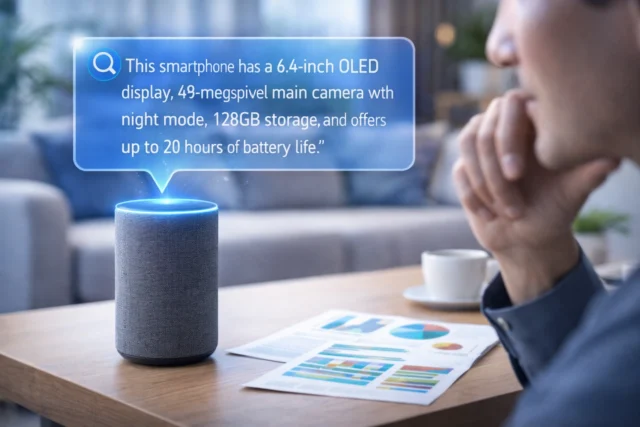
Traditional SEO Is Collapsing Under Voice Search Pressure
Featured Snippets and Position Zero Are Voice Marketing Gold
In a voice-first world, there’s no page one, there’s only position zero. Voice assistants return one answer per query, and it usually comes from the featured snippet. This makes it the most valuable real estate in marketing. To win it, brands must build content that delivers concise, structured answers to common questions. Think “how,” “what,” and “where”, phrased in natural language. MIT Technology Review reveals that 70% of voice responses pull directly from snippets, making snippet optimization a voice marketing necessity, not a nice-to-have.
Key benefits:
- Higher click-through rates
- Exclusive voice assistant coverage
- Competitive content moat
Marketing Algorithms Are Being Rebuilt for Spoken Word Optimization
Search engine algorithms are evolving. Old models rewarded link volume and keyword density. But voice search introduces new variables: speech patterns, user tone, and intent velocity. Today’s marketing algorithms are increasingly powered by natural language processing (NLP), not rigid formulas. Google’s BERT and MUM models parse meaning the way humans do. IBM confirms that AI-based interpretation is reshaping content ranking, especially for voice interfaces.
Traditional vs Voice-Driven Marketing Algorithms
| Element | Traditional SEO | Voice-Driven Marketing |
| Focus | Keywords | Semantic Context |
| Ranking Signals | Backlinks | Structured Answers |
| Optimization Format | Pages | Sentences/Answers |
Brand Authority in Voice Marketing Is Won Through Structured Data
Schema Markup Is the Silent Engine of Voice-First Marketing
Voice marketing isn’t won on creative copy but won on structured data. Schema markup is the code that teaches machines to interpret and deliver your content as answers. Without it, your website is just noise to a voice assistant. Using Schema.org formats, brands can define their services, locations, hours, and FAQs in machine-readable ways. IBM emphasizes schema as the backbone of intelligent digital discovery. Marketers who fail to implement schema miss out on voice traffic by default. In voice marketing, structure isn’t optional but strategic dominance.

The Marketing Funnel Is Being Redefined by Conversational AI
Awareness to Action Happens in a Single Voice Command
The traditional marketing funnel; awareness, consideration, decision is obsolete in a voice-first world. Voice search collapses all three into a single sentence. Saying “Order my usual pizza” combines brand recall, preference, and purchase in one command. This shift shortens decision cycles and demands marketing content that’s action-ready at every touchpoint. Brands must optimize for transactional voice triggers, integrating tools like voice commerce APIs and branded assistant skills. Harvard Business Review notes that brands able to compress the funnel via voice interactions retain exponentially higher engagement.
Implication for marketers:
- No room for persuasion
- Must anticipate needs
- Must embed actions in answers
Re-engagement Marketing Must Now Speak Back
Voice is an acquisition tool and a conversation channel. Smart devices allow brands to re-engage users naturally, offering real-time, voice-driven prompts that outperform emails and banners. “Would you like to reorder your vitamins?” is more effective when spoken than when written. Marketers can deploy AI-driven voice workflows for retention, reminders, and upsells. McKinsey confirms that conversational re-engagement increases conversion and loyalty when driven by intelligent voice automation.
Marketing digital voice tactics:
- Timely reminders (“Need a refill?”)
- Preference-based upsells
- Conversational loyalty programs
The Privacy Backlash Will Reshape Voice Marketing Ethics
Marketing Must Balance Personalization with Listening Fatigue
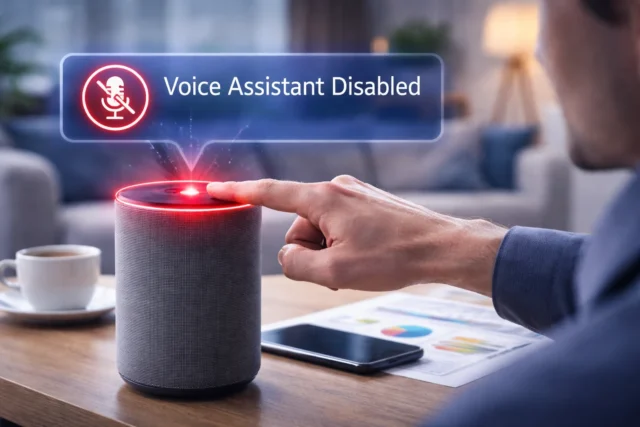
Always-on microphones raise ethical red flags. While users value personalized voice experiences, they don’t want to feel surveilled. Brands must walk a fine line: provide utility without crossing into creepiness. Voice marketing must avoid unsolicited prompts, background listening, or overly aggressive targeting. Deloitte recommends “privacy by design” principles; meaning respectful defaults, transparent data use, and user control at every step. Fatigue sets in when voice feels invasive. Relevance must be earned, not imposed.
Consent-Driven Voice Data Will Be a Competitive Advantage in Marketing Digital
The future of marketing digital environments is consent-first. Users are becoming savvier and more protective of their voice data. Brands that offer clear opt-ins, explain value, and allow control will gain a trust moat their competitors lack. Consent isn’t just compliance; it’s a branding strategy. Deloitte highlights that proactive consent mechanisms improve engagement and reduce churn. Trust leads to loyalty, and loyalty leads to retention. In the era of voice, ethical use of data is not a restriction. It’s a revenue multiplier.
Trust-building marketing practices:
- Notify users when voice data is used
- Offer opt-outs without penalties
- Explain how data improves their experience
Marketing Will Be Heard, Not Seen
The age of screen-based dominance in marketing is ending. Voice has arrived, and it’s rewriting the rulebook. Brands that delay optimization for voice search will vanish from the most critical channels of discovery, while early adopters dominate user intent in real time.
This isn’t just a shift in tools; it’s a shift in power. Algorithms now favor spoken context over textual tricks. Buyers speak naturally, and marketing must listen and respond in kind.
The verdict is unambiguous: marketers must optimize for voice or be silenced. The winners in this new era will not be seen. They will be heard.
References
How Smart Devices Are Shaping the Future of Marketing – Harvard Business Review
The Future of Personalization and Marketing – McKinsey
Voice Tech Strategy and the Future of Marketing – World Economic Forum
Structured Data and AI in Marketing – IBM
Voice Search and Featured Snippets – MIT Technology Review
Ethics of Voice Technology – Deloitte
How Voice is revolutionizing SEO : Are you ready? – H-in-Q
Call-in-Q | AI Phone Assistant for Customer Support