


Table of Contents
- Introducción
- What Are Behavioral Data Quality Metrics?
- Why Behavioral Data Quality Metrics Matter for Businesses in 2026
- Understanding Behavioral Data Quality Metrics
- Best Practices for Identifying Fraudulent Survey Respondents
- How AI Is Changing Survey Fraud Detection in 2026
- Tools & Resources for Survey Fraud Detection
- Conclusión
- Frequently Asked Questions
Introducción
Did you know that up to 30% of survey data may be tainted by fraud? This alarming statistic underscores the need to ensure the integrity of survey responses. As businesses increasingly rely on surveys for insights, fraudulent data can skew results, leading to poor decisions. Understanding and implementing behavioral data quality metrics is essential to weed out fraudulent survey respondents and protect data accuracy. At H-in-Q.com, our expertise in AI-powered solutions helps businesses achieve reliable data quality.
In this guide, you’ll discover seven essential behavioral data quality metrics to identify fraudulent survey respondents effectively.
What Are Behavioral Data Quality Metrics?
Behavioral data quality metrics are measures used to assess the validity and reliability of survey responses by analyzing respondent behavior patterns for inconsistencies or anomalies. These metrics help identify fraudulent or low-quality responses that could distort survey findings.
With the surge in online surveys, ensuring the accuracy of collected data has never been more crucial. Behavioral metrics, such as response time and answer consistency, help determine whether a respondent genuinely engaged with the survey. This approach is pivotal in maintaining the integrity of survey insights, particularly as businesses lean heavily on data-driven strategies.
Why Behavioral Data Quality Metrics Matter for Businesses in 2026
In 2026, businesses face a data-driven landscape where accurate insights are paramount. According to a Pew Research Center study, the global survey market is projected to exceed $5 billion by 2026. As reliance on data grows, the risk of fraudulent responses increases, threatening the validity of insights derived from survey data.
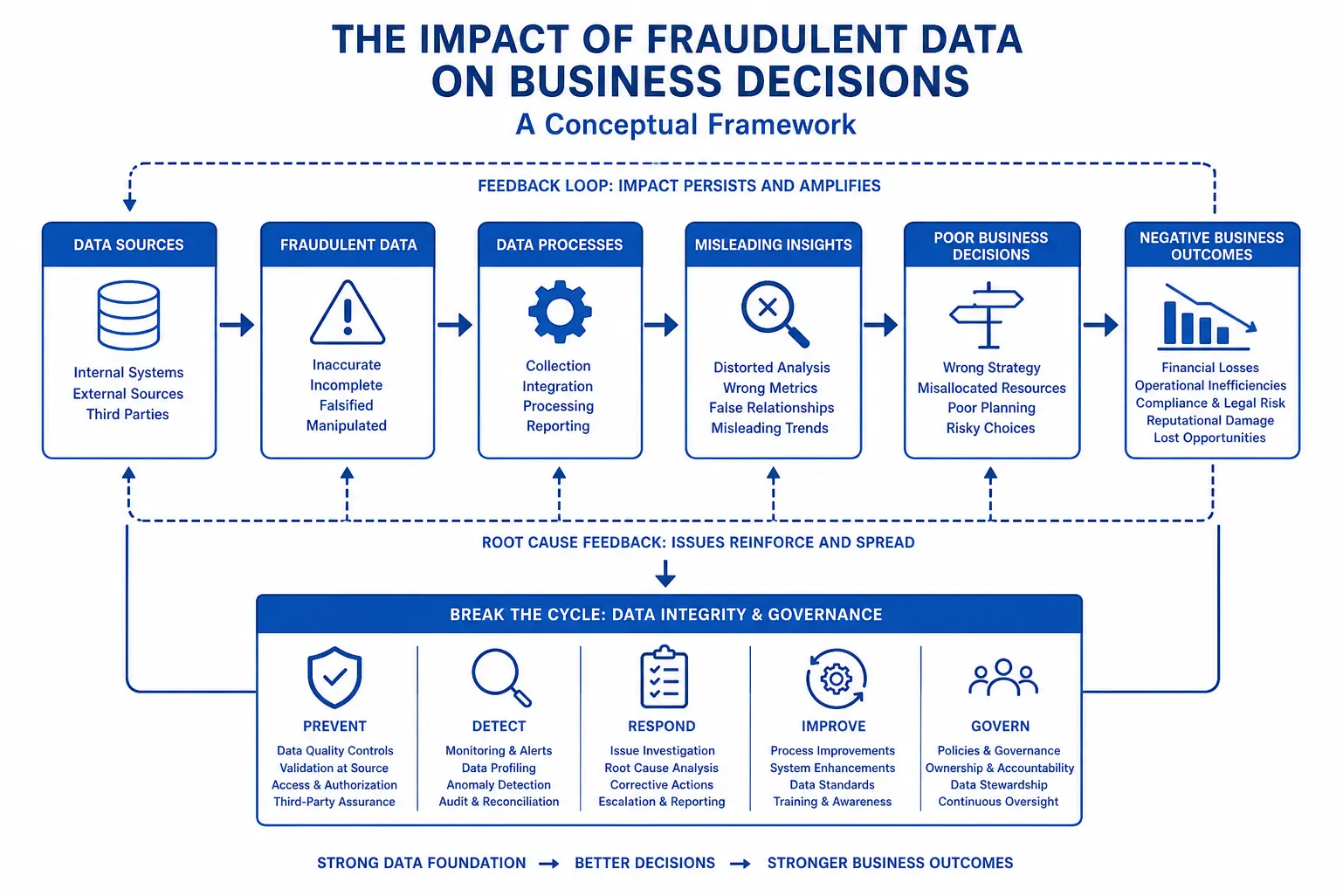
Ignoring fraudulent data can lead to misguided strategies, financial losses, and damaged reputation. For businesses aiming to stay competitive, using behavioral data quality metrics to ensure data integrity is non-negotiable. Companies that fail to address survey fraud may find themselves at a disadvantage, unable to make informed decisions based on skewed data.
Understanding Behavioral Data Quality Metrics
Behavioral data quality metrics focus on the behavior exhibited by respondents during the survey process. Here are key metrics to consider:
- Response Time Consistency: Analyze how long respondents take to answer each question. Unusually quick responses might indicate non-engagement or random answering.
- Answer Pattern Analysis: Look for repetitive patterns like selecting the same option multiple times without variation, which could suggest a lack of genuine engagement.
- Completion Rate: Track the percentage of completed surveys to identify potential drop-offs, hinting at disengagement or confusion.
- Engagement Level: Assess how interactively users engage with complex questions, indicating their commitment to providing thoughtful responses.
- Logical Consistency: Verify if responses logically align throughout the survey, catching contradictions that suggest fraud.
- IP Address Tracking: Use IP analysis to detect multiple submissions from the same location, which could indicate fraudulent activity.
- Device Fingerprinting: Identify repeat survey attempts from the same device to uncover potential fraud.
These metrics, when used in combination, provide a comprehensive view of respondent behavior, helping to flag potentially fraudulent or low-quality responses.
Best Practices for Identifying Fraudulent Survey Respondents
Follow these best practices to effectively identify fraudulent survey respondents:
- Set Clear Benchmarks: Establish standard response times and patterns to identify anomalies.
- Leverage AI Tools: Use AI-powered analytics tools to automate the detection of suspicious patterns.
- Conduct Regular Audits: Regularly review survey data for inconsistencies.
- Incorporate Control Questions: Use questions designed to catch inattentive or random responses.
- Utilize Customized Surveys: Tailor surveys to specific audiences to increase engagement and reduce random responses.
- Monitor IP and Device Data: Regularly analyze IP and device data for patterns indicative of fraud.
How AI Is Changing Survey Fraud Detection in 2026
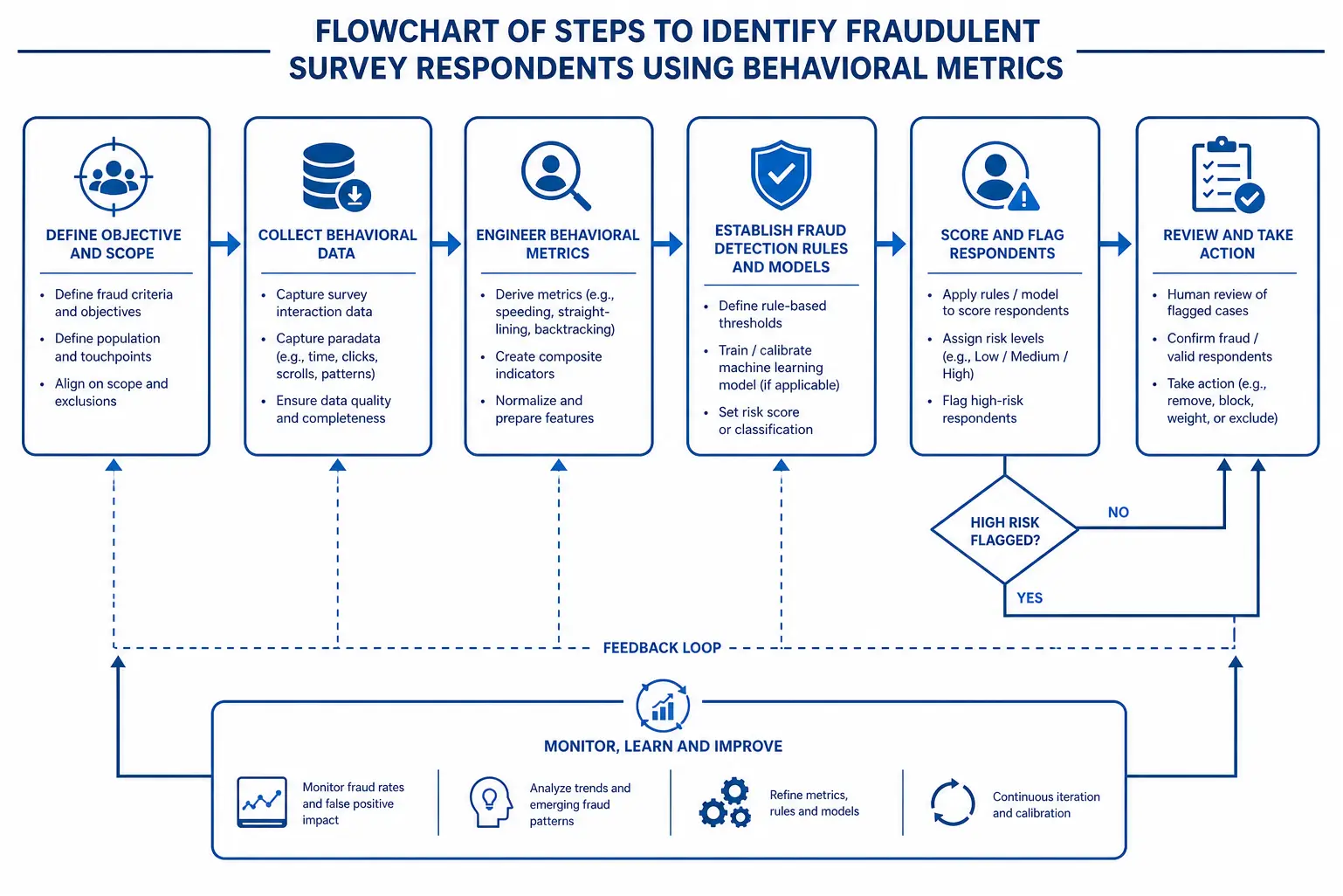
AI is revolutionizing survey fraud detection by automating the analysis of vast datasets, identifying patterns, and flagging anomalies. AI algorithms can detect subtle patterns in response behaviors that humans might overlook, enhancing the accuracy of fraud detection.
H-in-Q.com leverages AI to provide businesses with powerful tools for analyzing behavioral data, ensuring the integrity of survey responses. By integrating AI, organizations can efficiently manage data quality, allowing for quicker, more accurate insights.
Tools & Resources for Survey Fraud Detection
Here are some key tools and resources for detecting fraudulent survey respondents:
- SurveyMonkey: Offers features for tracking response patterns and flagging anomalies.
- Qualtrics: Provides advanced analytics for identifying fraudulent respondents.
- H-in-Q.com: Delivers AI-driven solutions for comprehensive survey data analysis.
- Typeform: Useful for creating engaging surveys that minimize fraudulent responses.
- Google Analytics: Tracks and analyzes user behavior across survey platforms.
Conclusión
Ensuring the accuracy of survey data is critical for businesses in 2026. By leveraging behavioral data quality metrics, organizations can effectively identify and eliminate fraudulent survey respondents, maintaining data integrity. Remember to utilize AI tools and best practices for optimal results. For more insights and solutions, explore how H-in-Q.com can help. As data continues to drive business success, ensuring its quality is paramount.
Frequently Asked Questions
What are behavioral data quality metrics?
Behavioral data quality metrics are measures used to assess the validity and reliability of survey responses by analyzing respondent behavior patterns for inconsistencies or anomalies.
How can businesses detect fraudulent survey respondents?
Businesses can detect fraudulent survey respondents by analyzing behavioral data quality metrics, such as response time consistency, answer patterns, and engagement levels.
Why is detecting fraudulent survey respondents important?
Detecting fraudulent survey respondents is crucial because it ensures data integrity, leading to more accurate market insights and better-informed business decisions.
What role does AI play in detecting survey fraud?
AI enhances the detection of survey fraud by automating the analysis of large datasets, identifying patterns, and flagging anomalies that may indicate fraudulent activity.
Which tools can help identify fraudulent survey respondents?
Tools like SurveyMonkey, Qualtrics, and H-in-Q.com’s proprietary solutions offer features for analyzing behavioral data and identifying potential fraud in survey responses.
What happens if businesses ignore fraudulent survey data?
Ignoring fraudulent survey data can lead to misguided strategies, financial losses, and damaged reputation due to decisions based on inaccurate insights.