

Most comparison articles on AI focus group platforms were written by people who tested one category and called it comprehensive. The reality in 2026 is that “AI focus group platform” now describes three fundamentally different types of software and picking the wrong category for your research objective is more expensive than picking the wrong vendor within the right one.
This guide cuts through that confusion. We have evaluated seven platforms across all three categories, assessed them against the criteria that actually matter for US marketing and research teams, and built the only honest decision matrix in this space. H-in-Q’s AI market research team works with these tools globally, which means the assessments below are grounded in real implementation experience, not vendor marketing copy. By the end, you will know exactly which platform to use for each research scenario and which ones to avoid.
What Is an AI Focus Group Platform? Understanding the Three Categories
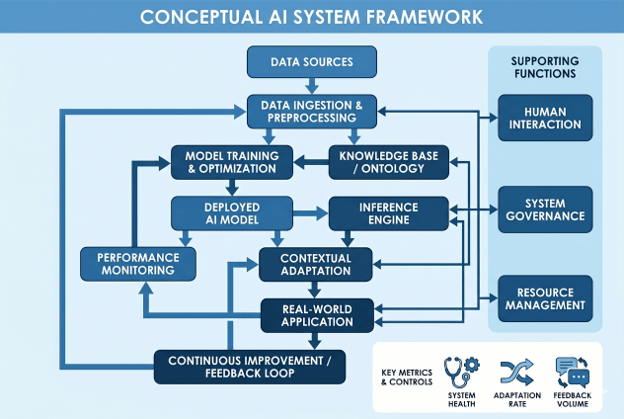
Before comparing platforms, every buyer needs to understand that the AI focus group software market has split into three distinct lanes. Each solves a different problem, serves a different budget, and produces different outputs.
Category 1: AI-Assisted Platforms (Real Participants + AI Infrastructure) These platforms run focus groups with real human participants while AI handles recruitment targeting, real-time moderation support, transcription, sentiment analysis, and automated thematic coding. Best for: high-stakes validation, emotional and nuanced research, final decision-making.
Category 2: Synthetic Persona Platforms (No Real Participants) These platforms generate AI-powered virtual participants that simulate how target audience segments would respond to your stimulus. Best for: rapid concept screening, hypothesis generation, pre-testing discussion guides, cost-constrained iterative research.
Category 3: AI Analysis Tools (Process Existing Sessions) These platforms take recordings or transcripts from focus groups you have already run on any platform, and apply AI to extract themes, sentiment, and insights at speed. Best for: teams with existing research programs who need faster analysis, not a new research method.
The most sophisticated US research programs use all three in sequence. Synthetic tools screen hypotheses, AI-assisted platforms validate the strongest candidates with real participants, and AI analysis tools compress the time from session to insight.
The 7 Best AI Focus Group Platforms in 2026
1. Hivox-in-Q Best for Community-Based AI Focus Groups with Multilingual Reach
Category: AI-Assisted (Real Participants) Best for: Brands running focus groups across multiple languages and markets, community-driven qualitative research, teams that need authentic participant responses with AI analytical infrastructure
Hivox-in-Q combines the energy of community group discussions with AI-powered moderation and real-time insight extraction. Unlike platforms that run individual one-on-one AI interviews, Hivox-in-Q replicates the genuine group dynamic of a traditional focus group; where participant interactions surface insights that solo interviews cannot; while AI manages facilitation, sentiment tagging, and thematic analysis simultaneously.
The platform’s core differentiator is its multilingual architecture: sessions run natively in English, French, Spanish, and Arabic without translation lag, making it the only AI focus group platform built specifically for US teams researching MENA, Francophone, and Hispanic-American audiences in their native language. For US brands with international expansion goals, this eliminates the need for separate regional research vendors.
What it does well: Community-based group dynamics, multilingual native support, real-time AI moderation, integrated analytics dashboard, authentic consumer voice at scale. Limitations: Newer to the US market than legacy platforms; enterprise integrations still expanding. Pricing: Custom, contact H-in-Q for project-based and enterprise pricing. Ideal use case: A US CPG brand testing new product messaging simultaneously across English, Spanish, and French-speaking audiences in a single AI-moderated community session.
👉 Hivox-in-Q platform
2. Remesh Best for Large-Scale Live Audience Engagement
Category: AI-Assisted (Real Participants) Best for: Enterprises needing to run live focus group discussions with 50–1,000 participants simultaneously, organizations with established research programs looking to scale qual to quant scale
Remesh enables live interaction with up to 1,000 participants at once, using AI to analyze, understand, and segment verbatim audience responses in real time. The platform has operated for 10+ years, which gives it a depth of institutional knowledge and a track record with enterprise research teams at CPG companies, financial services, and consulting firms; that newer entrants cannot match.
The platform’s AI engine surfaces consensus and divergence across large groups in real time, allowing moderators to probe the most interesting signals while the session is still live. This is qualitative depth at quantitative scale; a combination traditional focus groups cannot deliver.
What it does well: Massive simultaneous participant engagement, real-time AI analytics, live session adaptability, strong enterprise support, long track record with Fortune 500 research teams. Limitations: No publicly available pricing; enterprise-only positioning makes it inaccessible for smaller research budgets; UI can overwhelm first-time users. Pricing: Custom enterprise pricing, contact Remesh directly. Ideal use case: A financial services firm running live policy feedback sessions with 500 customers simultaneously across three market segments.
3. Perspective AI Best for Conversation-Grade Depth at Scale
Category: AI-Assisted (Real Participants; individual AI-moderated conversations) Best for: Product, CX, and UX research teams that need deep per-respondent insight, not just aggregate themes; researchers who want AI to probe vague answers rather than accept the first response
Perspective AI is built around a principle that most platforms ignore: the highest-value research moments happen at “I’m not sure” and the AI should probe there rather than move on. Its interviewer agent runs hundreds of parallel one-on-one AI-moderated conversations, each averaging 600–1,200 words of substantive customer voice, then synthesizes across conversations with quote-level citation back to original transcripts.
What it does well: Deepest per-respondent insight in the category, rigorous AI probing of vague responses, transcript-level quote attribution in reports, scales to hundreds of parallel sessions. Limitations: Individual conversation format does not replicate group dynamics; pricing model can become expensive at scale; best suited to research teams with strong qualitative expertise. Pricing: Project-based and subscription plans available; free study to start. Ideal use case: A SaaS product team running 200 parallel AI-moderated customer interviews to understand why a new feature has low adoption.
4. Discuss.io Best for Full-Service Video Focus Groups with Global Reach
Category: AI-Assisted (Real Participants) Best for: Research teams running traditional video focus groups who want a purpose-built platform with AI transcription, live translation, and stakeholder observation tools built in
Discuss.io is the most complete end-to-end video focus group platform on the market. It handles everything from participant recruitment across 100+ countries and live session facilitation with hidden backroom observers, through to AI-powered transcription, clip creation, and highlight reel generation. It is the platform of choice for agencies and enterprise teams that run high volumes of video qualitative research and need every component integrated in one place.
What it does well: End-to-end workflow coverage, global recruitment in 100+ countries, live translation for international sessions, stakeholder observation room, GDPR and ISO 27001 compliance. Limitations: Premium pricing positions it above most mid-market budgets; complexity requires onboarding investment; better for teams running regular research volumes than one-off projects. Pricing: Custom enterprise pricing, project-based options available. Ideal use case: A global consumer brand running simultaneous video focus groups in the US, Germany, and Brazil with live translation and client-side observers.
5. Dytto Best for Synthetic AI Focus Groups and Rapid Concept Testing
Category: Synthetic Persona Platform Best for: Marketing teams that need to test multiple concepts quickly before committing to full research, early-stage product teams validating hypotheses, teams with limited research budgets
Dytto represents the synthetic AI focus group category at its most practical. The platform generates detailed audience personas from your target demographic and psychographic specifications, then runs structured discussions among those personas against your research stimulus. Full results arrive in hours, not weeks; making it viable for the kind of continuous, iterative research that traditional methods reserve for annual planning cycles.
What it does well: Speed (results in hours), cost efficiency (90%+ savings vs. traditional), unlimited concept iterations, no recruitment overhead, accessible to non-researchers. Limitations: Synthetic output is directional, not definitive; emotional nuance and unexpected human responses are absent; not suitable for final validation of high-stakes decisions. Pricing: Tiered plans with free entry point; paid plans for advanced persona customization and volume. Ideal use case: A DTC brand testing five different product positioning concepts with their target demographic in a single afternoon before investing in full consumer research.
6. Looppanel Best for AI-Powered Analysis of Existing Focus Group Recordings
Category: AI Analysis Tool Best for: Research teams with existing focus group recordings who need faster analysis, UX researchers processing high volumes of interview data, teams that run sessions on any platform and want AI-powered synthesis
Looppanel does not run focus groups; it makes analyzing them dramatically faster. Upload any focus group recording, and Looppanel delivers speaker-labeled transcripts in minutes, automatic affinity mapping by theme and question, AI-generated insights with source quotes, and a Google-like search across your entire research repository. Users report compressing one month of manual thematic analysis into two days.
What it does well: Exceptional transcription accuracy, automatic thematic clustering, AI interrogation of data, repository building across multiple sessions, integrates with Notion and other team tools, accessible pricing for individual researchers. Limitations: Does not run or recruit for focus groups; analysis quality depends on recording quality; best value for teams running regular research volumes. Pricing: Plans from $30/month (individual) to $12,000/year (enterprise). Ideal use case: A UX research team processing 20 focus group recordings from the past quarter and needing consolidated thematic findings for a product roadmap presentation.
7. BTInsights Best for Verifiable AI Analysis with Quote-Level Traceability
Category: AI Analysis Tool Best for: Research teams where insight accuracy and source verification are non-negotiable, enterprise researchers who need to defend findings to stakeholders, teams concerned about AI hallucinations in qualitative analysis
BTInsights differentiates on one critical dimension: every AI-generated insight is traceable back to the exact source quote in the original recording. In an environment where AI hallucination is a legitimate concern for enterprise research buyers, this traceability architecture makes BTInsights the most defensible analysis platform in the category. It also includes a Quote Finder tool; type a keyword or concept and it surfaces the most relevant participant quotes across all sessions and automated highlight reel creation for stakeholder presentations.
What it does well: Quote-level source attribution for every insight, AI hallucination mitigation by design, cross-session segment comparison, highlight reel generation, speaker-labeled transcription with filler word removal. Limitations: Analysis-only platform with no session facilitation; premium positioning versus entry-level analysis tools; UI requires onboarding for new users. Pricing: Contact BTInsights for current pricing. Ideal use case: A pharmaceutical market research team analyzing 15 physician focus group sessions where every finding needs source attribution before presentation to the medical affairs team.
Platform Comparison: Decision Matrix for US Research Teams
| Platform | Category | Real Participants | Multilingual | Pricing Tier | Best For |
| Hivox-in-Q | AI-Assisted | ✅ | ✅ Native EN/FR/ES/AR | Custom | Community focus groups, MENA + US markets |
| Remesh | AI-Assisted | ✅ | ✅ | Enterprise custom | Large-scale live engagement (50–1,000 participants) |
| Perspective AI | AI-Assisted | ✅ | Limited | Project/subscription | Deep per-respondent qualitative insight |
| Discuss.io | AI-Assisted | ✅ | ✅ Live translation | Enterprise custom | Full-service video qual, global recruitment |
| Dytto | Synthetic | ❌ | Limited | Free–paid tiers | Rapid concept testing, hypothesis screening |
| Looppanel | Analysis | N/A | ✅ | $30–$12,000/yr | Fast analysis of existing recordings |
| BTInsights | Analysis | N/A | ✅ | Custom | Verified, source-attributed insight extraction |
How AI Is Changing the Focus Group Software Market in 2026
The focus group software market is undergoing a structural reorganization that has no precedent in its 60-year history. Three forces are driving simultaneous disruption. First, synthetic AI platforms have democratized research access; a startup with a $500 budget can now run the equivalent of five concept-testing sessions that would have cost $150,000 in 2020. Second, AI analysis tools have broken the bottleneck between data collection and insight delivery; the six-week gap between running a focus group and acting on its findings has collapsed to days. Third, community-based AI platforms are rebuilding the group discussion format from the ground up, preserving the authentic interaction dynamics that made focus groups valuable in the first place while eliminating the logistical friction that made them impractical for continuous research.
The research programs that will dominate their categories in 2027 are the ones building all three capabilities now, not choosing between them. H-in-Q’s market research suite is designed around this integrated model, combining Hivox-in-Q’s community discussion platform with Converse-in-Q’s conversational AI survey capabilities and BuzzPulse-in-Q’s social listening intelligence for a full-stack consumer insight operation.
View H-in-Q’s AI Market Research Tools
5 Features Every AI Focus Group Platform Must Have in 2026
The market is noisy and vendor marketing is unreliable. Before signing any contract or committing to any platform, verify these five capabilities directly, not from a features page, but from a live demo or pilot study.
- AI probing of vague answers. The platform’s AI must ask follow-up questions when a participant gives a surface-level or unclear response. Platforms that accept the first answer produce shallow data. Ask to see a sample transcript and count how many times the AI probed deeper on ambiguous responses.
- Quote-level attribution in synthesis reports. Every theme, finding, and recommendation in the output must link back to the specific participant response it came from. This is the only way to verify AI-generated insights and defend findings to stakeholders.
- Scalability without degraded depth. Run a pilot at your target scale; 50, 100, 500 sessions; before committing. Some platforms degrade in response quality at high volume. You want the 500th conversation to be as probing as the first.
- Transparent, predictable pricing. “Contact us for pricing” is not a pricing model; it is a negotiation. Platforms that hide pricing typically price opportunistically. Get total cost of ownership in writing before piloting.
- Multilingual support if your research spans markets. If you are a US brand researching Hispanic-American consumers, French-Canadian markets, or MENA audiences, confirm native language support, not machine translation layered on English infrastructure. The difference in data quality is significant.
Read also :
How AI Focus Groups Work: A Plain-English Guide for US Marketing Teams in 2026
B2B AI Market Research: How to Understand Buyers Without Surveys in 2026
The Ultimate Guide to AI-Powered Market Research: Strategy, Tools, and ROI for US Businesses in 2026
H-in-Q’s Case Studies
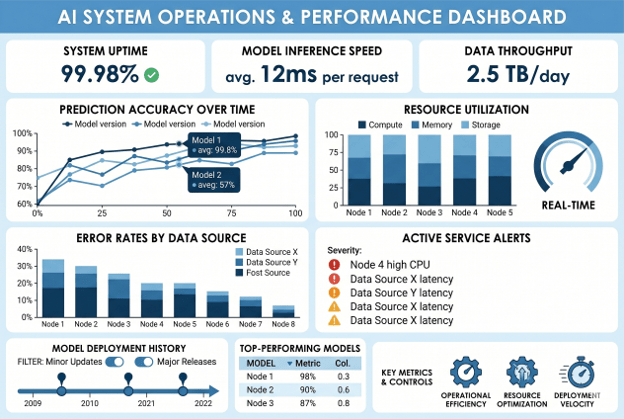
The following graphic is a conceptual data visualization wireframe utilizing placeholder metrics; it does not contain real or live platform data.
FAQ: Best AI Focus Group Platforms 2026
Best AI Focus Group Platforms 2026
What is the best AI focus group platform for small businesses?
For small businesses with limited research budgets, synthetic persona platforms like Dytto offer the most accessible entry point, running concept testing studies for hundreds of dollars with results in hours. For small teams that need real participant insight, Looppanel ($30/month) pairs with any video conferencing tool to deliver AI-powered analysis at an affordable price point.
Which AI focus group platform is best for multilingual research?
Hivox-in-Q is the strongest option for teams running research across English, French, Spanish, and Arabic simultaneously, with native multilingual infrastructure built into the platform. Discuss.io offers live translation for broader language coverage in video sessions. Most other platforms rely on post-session translation, which introduces quality loss in qualitative data.
Can AI focus group platforms replace traditional in-person research?
AI-assisted platforms can replace traditional focus groups for most research objectives; concept testing, messaging evaluation, product feedback, and audience segmentation. The exception is research requiring physical sensory experience (taste testing, tactile product evaluation) or deep emotional processing of sensitive topics. For those use cases, in-person research retains an advantage that current AI platforms cannot fully replicate.
How long does it take to get results from an AI focus group platform?
Synthetic AI platforms deliver full results in 30 minutes to a few hours. AI-assisted platforms with real participants produce post-session analysis within 24–48 hours, compared to 2–4 weeks for traditional manual analysis. The full project timeline from brief to final report, compresses from 6–8 weeks for traditional research to 1–2 weeks for AI-assisted, and same-day for synthetic.
What is the difference between AI focus group platforms and traditional online focus group software?
Traditional online focus group software (Zoom, Teams, basic video platforms) provides the infrastructure for human-moderated video sessions with no AI involvement. AI focus group platforms add AI moderation, automated recruitment, real-time sentiment analysis, and thematic coding, either with real participants or through synthetic persona simulation. The operational difference is roughly 80% less time and 70–90% less cost for equivalent research depth.
How do I choose between a synthetic AI platform and a real-participant platform?
Use synthetic platforms when you are screening hypotheses, testing multiple concepts rapidly, or working with a limited budget for directional insight. Use real-participant platforms when you need emotional authenticity, are validating final decisions, or are researching sensitive topics where lived experience matters. The best research programs use synthetic tools in Phase 1 to narrow options, then validate the strongest candidates with real participants in Phase 2.
Conclusion
The AI focus group platform market in 2026 gives US research teams more options than they have ever had and more ways to make the wrong choice. The single most important decision is category selection: no platform excels across all three lanes, and the best synthetic tool in the world will not substitute for authentic human response when your research objective demands it.
For teams starting out, the practical path is to pilot one platform in each category on a real project before committing to annual contracts. Run a synthetic study on your next concept test. Use an AI analysis tool on your last batch of recordings. Try a community-based AI session in place of your next scheduled traditional focus group. The ROI case will be clear within two projects. H-in-Q’s Hivox-in-Q platform is available for pilot studies combining community-based real-participant research with AI analytical infrastructure built for multilingual, multi-market US and global research programs. Start your pilot →
The brands running the best research in 2027 are picking their platforms now.