


The $140 billion global market research industry is experiencing its most significant structural disruption since the invention of the telephone survey. Andreessen Horowitz, Harvard Business Review, and Foundation Capital have each published analyses describing AI as a fundamental transformation of how businesses collect, analyze, and act on consumer intelligence, not an incremental improvement, but a category-level shift from labor-intensive agency work to software-powered continuous intelligence.
According to Qualtrics’ 2026 Market Research Trends report, 95% of researchers now use AI tools regularly or experimentally. McKinsey reports that 78% of organizations use AI in at least one business function, up from 55% just two years ago. The question US businesses are asking is no longer whether to adopt AI market research, but how to build the right infrastructure, in the right sequence, with the right tools, to generate measurable competitive advantage.
This guide covers everything. Start here for the complete picture and use the linked articles throughout for deeper treatment of each section.
Part 1: What Is AI-Powered Market Research?
AI-powered market research is the use of artificial intelligence; primarily machine learning, natural language processing (NLP), and predictive analytics; to automatically collect, analyze, and interpret consumer and market data at scale.
Traditional market research operates on a linear, project-based model: define a research question, design a study, recruit respondents, collect responses, clean and analyze data manually, and deliver findings weeks later. AI market research breaks every stage of that sequence. It ingests data from multiple sources simultaneously, processes it automatically, detects patterns through machine learning, and delivers structured insights continuously, without waiting for a project to be commissioned and executed.
The practical result is a research model that is faster by an order of magnitude, lower in cost by 50%, and capable of operating continuously rather than periodically. AI tools analyze data 100 times faster than traditional methods, according to InsightMark Research benchmarks.
Part 2: The Four Core Types of AI Market Research
Understanding the four distinct types of AI market research is essential before selecting tools or building a research stack. Each type answers different questions, uses different data sources, and requires different platform capabilities.
Type 1: Social Listening and Brand Monitoring
Social listening uses AI and NLP to continuously monitor brand mentions, sentiment, competitive activity, and consumer conversations across social media, news, forums, and review platforms. It answers questions like: How is consumer sentiment about our brand changing right now? What are people saying about our competitors this week? Is a new trend emerging in our category?
This type replaces periodic brand health trackers with continuous, real-time intelligence. Platforms like Brandwatch monitor 500+ million new public posts daily from 100+ million sources. H-in-Q’s BuzzPulse-in-Q provides multilingual monitoring across English, French, Spanish, and Arabic simultaneously for brands operating across global and MENA markets.
Type 2: AI-Automated Survey Research
AI survey platforms automate the full research lifecycle; study design, panel recruitment, quality control, data collection, analysis, and reporting. They use machine learning to flag fraudulent or low-quality responses automatically, NLP to analyze open-ended answers at scale, and AI assistants to suggest research methodologies and generate insight summaries.
This type replaces traditional agency-commissioned surveys with faster, lower-cost equivalents. Quantilope delivers survey research in days rather than weeks. Attest applies 12+ behavioral quality checks to every response before it enters the dataset. Both replace the manual coding and analysis that consumed most of traditional survey research’s time and cost.
Type 3: Competitive Intelligence Automation
AI competitive intelligence platforms continuously monitor competitor websites, pricing pages, product announcements, job listings, advertising campaigns, and customer reviews; delivering automated alerts when significant changes occur. They answer questions like: What did our top competitor just change on their pricing page? What new features are they building based on their job postings? How are customers rating their latest product launch?
Crayon is the leading purpose-built competitive intelligence platform, tracking competitor activity across millions of sources and delivering curated alerts to sales and marketing teams via Salesforce, Slack, and other workflow tools.
Type 4: Conversational AI Research
Conversational AI research platforms conduct adaptive consumer interviews, either with real human participants or with AI-generated synthetic personas, adjusting questions dynamically based on each respondent’s previous answers. They produce qualitative insight depth at a quantitative scale, answering questions like: Why do our customers prefer us over competitors? What emotional drivers influence their purchase decisions? Which messaging resonates, and why?
H-in-Q’s Converse-in-Q conducts adaptive AI-moderated conversations with consumers, synthesizing findings across hundreds of simultaneous conversations into structured research outputs. Synthetic persona platforms like Simile, which raised $100 million in February 2026 enable concept testing and consumer simulation without recruiting human participants, achieving up to 90% alignment with real human survey data on structured tasks.
👉 How AI Market Research Works: The Complete 6-Step Process →
Part 3: AI vs Traditional Market Research: The Complete Comparison
The choice between AI and traditional research is not binary; it is a question of which method answers which research questions more reliably and efficiently.
| Dimension | Traditional Research | AI-Powered Research |
| Time to insight | 4–12 weeks | 24–72 hours |
| Cost per cycle | $15,000–$100,000+ | $500–$5,000/month subscription |
| Data sources | Surveys, focus groups, interviews | Social media, reviews, behavioral data, surveys |
| Research frequency | Periodic (quarterly, annual) | Continuous |
| Depth of insight | High: human nuance and motivation | Moderate: patterns and sentiment |
| Primary data generation | Yes: new proprietary data | Mostly secondary signal analysis |
| Competitive monitoring | Limited, ad hoc | Automated, real-time |
| Multilingual capability | Expensive (separate engagements) | Simultaneous (single platform) |
| Best for | Strategic validation, “why” questions | Monitoring, trend detection, “what” questions |
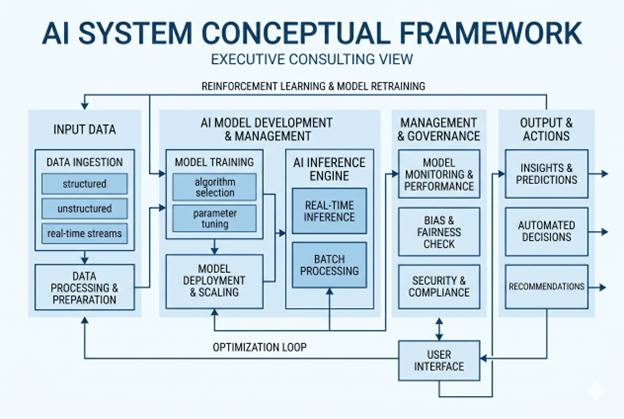
The businesses achieving the greatest research ROI in 2026 use AI to replace monitoring and tracking workflows, and reserve traditional methods for strategic decisions that require primary data and human depth. The combination produces more complete intelligence than either approach alone at a substantially lower total cost.
👉 Full AI vs Traditional Market Research Comparison →
Part 4: The AI Market Research Technology Stack: How It All Connects
AI market research is not a single tool. It is a technology stack where each layer handles a different research job, and the layers connect to multiply each other’s value.
Layer 1: Data Sources
The quality of AI research output depends entirely on the quality and breadth of data input. The primary data sources are social media platforms (Twitter/X, LinkedIn, Reddit, Instagram, TikTok, Facebook), review sites (Google Reviews, G2, Trustpilot, Yelp, Amazon), news and media, customer support transcripts, behavioral analytics, and CRM data. The more complete the data connection, the more accurate and actionable the outputs.
Layer 2: AI Processing
The processing layer applies the core AI technologies to raw data. Natural language processing reads and categorizes unstructured text. Machine learning identifies patterns and clusters across large datasets. Sentiment and emotion detection classifies the emotional tone behind consumer language. Predictive modeling uses historical patterns to forecast future behavior.
Layer 3: Research Applications
The application layer contains the specific research tools that perform each research job: social listening platforms for brand monitoring, survey platforms for consumer validation, competitive intelligence tools for market positioning, and conversational research tools for qualitative depth.
Layer 4: Insight Delivery
The delivery layer transforms AI-processed data into structured, actionable outputs: automated dashboards that update in real time, alert systems that surface anomalies requiring attention, narrative reports that summarize findings, and direct integrations with CRM, marketing automation, and product management tools that make research insights actionable at the moment of decision.
Layer 5: Human Judgment
The interpretation layer is not automated and should not be. Experienced researchers and marketers interpret AI-generated findings in the context of specific business situations, competitive dynamics, and strategic priorities. AI identifies what is happening and what patterns exist. Humans determine what those patterns mean for a specific business and what actions they should drive.
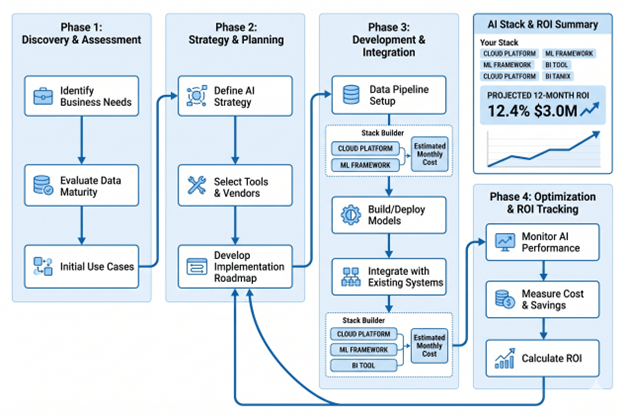
Part 5: How to Build Your AI Market Research Stack: Phase by Phase
Building an AI research stack works best in phases, with each phase proving ROI before the next investment is made.
Phase 1: Free Stack ($0/month) – Validate and Monitor
Every organization should run this stack before spending on paid tools. The three components take under an hour to set up and deliver immediate value.
Perplexity AI (Free) for secondary research: competitive landscape questions, market sizing estimates, trend identification, and industry context research; all with cited sources. This replaces hours of manual web research with minutes of structured query.
Google Trends (Free) for demand monitoring: check whether search interest in your product category, competitors, and key topics is growing or declining. Run this check before any significant product or marketing investment.
AnswerThePublic (Free tier) for customer question mapping: surface the exact questions your potential customers type into search engines about your category. This feeds content strategy, product development, and messaging directly.
Reddit and Google Reviews (Free manual) for unfiltered consumer voice: 30 minutes reading relevant Reddit threads and competitor reviews produces qualitative consumer insight that traditional research would charge thousands of dollars to replicate.
Phase 2: Monitoring Stack ($50–$200/month) – Add Competitive and Brand Intelligence
Once your organization has validated the value of AI research and is generating revenue, add continuous monitoring capability.
Brand24 (from ~$199/month) monitors brand and competitor mention across social media, news, forums, and review platforms in real time. This replaces periodic manual brand monitoring with always-on automated intelligence.
Semrush (from ~$117/month) provides competitive search and content intelligence: which keywords your competitors rank for, which content drives their traffic, which gaps they have left open for you to fill.
Phase 3: Survey and Intelligence Stack ($200–$500/month) – Add Consumer Validation
At this investment level, add primary consumer research capability and deeper competitive intelligence.
Attest or Quantilope for AI-powered consumer surveys: concept testing, messaging validation, brand tracking, and consumer pulse research; delivered in 3–5 days at a fraction of traditional agency cost.
Crayon for competitive intelligence automation: continuous tracking of competitor pricing, product, messaging, and job posting changes; with alerts delivered to your sales and marketing teams.
Phase 4: Enterprise Stack ($500–$5,000+/month) – Complete Research Infrastructure
Enterprise organizations add comprehensive social listening at scale (Brandwatch), conversational research capability (Converse-in-Q), and audience profiling platforms (GWI Spark) to build a complete, always-on research infrastructure.
👉 The Complete Small Business AI Market Research Guide →
👉 The 7 Best AI Market Research Tools Compared →
Part 6: Measuring ROI – The Three-Dimension Framework
Measuring the ROI of AI market research requires tracking three distinct dimensions simultaneously.
Dimension 1: Direct Cost Savings
Compare annual AI platform subscription costs to the traditional research budget they replace. A typical mid-market implementation replaces $150,000–$250,000 in annual agency research spend with $40,000–$80,000 in AI platform subscriptions, a direct cost reduction of 50–60%. This is the easiest ROI dimension to quantify and typically the first metric used to justify investment to leadership.
Dimension 2: Time Savings and Capacity
Track the hours per week the research team reclaims from manual data collection, analysis, and report preparation. AI tools that automate survey coding, sentiment analysis, and competitive monitoring consistently return 60–80% of research team time to higher-value interpretation and strategy work. For organizations paying research analysts $80,000–$120,000 per year, this time reallocation represents significant hidden ROI beyond the direct cost savings.
Dimension 3: Decision Quality and Business Outcomes
The highest-value ROI dimension tracks business outcomes from decisions made using AI research signals. Campaign performance improvements from faster concept testing validation. Product launch success rates from earlier consumer signal detection. Crisis response speed from real-time sentiment monitoring. Brand health trajectory from continuous competitive tracking. These outcomes are harder to attribute precisely but represent the compounding business case that makes AI research infrastructure a strategic investment rather than an operational cost reduction.
The organizations with the clearest AI research ROI track all three dimensions simultaneously and connect research outputs directly to business decisions, not just to research reports.
Part 7: The 10 Biggest Shifts AI Is Creating in Consumer Research
AI is not just making existing research cheaper and faster. It is enabling entirely new research capabilities and changing how consumers themselves interact with brands and products.
Consumer use of AI applications grew 62% in two years (IBM 2026 Consumer Research Study). About 25% of consumers now cite AI platforms as their primary research tool for purchase decisions (Adobe 2026). Synthetic consumer research is on track to account for 50%+ of market research inputs by 2027. Survey response rates are declining, only 3 in 10 consumers now explain why they leave a brand (Qualtrics 2026). Gen Alpha is entering the market as the first generation with AI-native consumer expectations.
Each of these shifts has direct implications for research strategy, from the tools used to measure brand health, to the questions research programs need to answer.
👉 10 Ways AI Is Changing Consumer Research in 2026 →
Part 8: AI Market Research in Practice – What Real Implementation Looks Like
The gap between reading about AI market research and actually implementing it is where most organizations stall. The most common implementation patterns across US businesses in 2026 fall into three categories.
The Parallel Running Pattern: Run AI tools alongside existing traditional research for one full cycle before retiring anything. Compare AI-detected signals to traditional research findings. This calibration period builds organizational confidence and catches platform limitations before they affect strategic decisions. It also produces the single most compelling internal business case: a concrete data point showing how many weeks earlier the AI detected a trend the traditional research eventually confirmed.
The Monitoring-First Pattern: Begin by replacing periodic brand health tracking with continuous AI social listening, before touching survey or primary research workflows. This pattern delivers the highest immediate ROI at the lowest organizational risk: clear cost savings, immediate speed improvement, and multi-market coverage, without requiring changes to the primary research processes that stakeholders are most invested in defending.
The Stack-Building Pattern: Implement tools in phases, proving ROI at each phase before expanding. Start with free tools, add monitoring, add surveys, add competitive intelligence. Each layer builds on the previous one, and the research stack grows in direct proportion to demonstrated business value rather than on a fixed technology implementation timeline.
👉 Real Case Study: A MENA Brand Cut Survey Costs 60% With AI Market Research →
Part 9: Common Questions About AI-Powered Market Research
The seven articles in this cluster answer the most common questions in depth. Here is the essential summary.
Is AI market research accurate? Yes, for the workflows it is designed for. Sentiment analysis achieves 85–90% accuracy on standard English text. Synthetic consumer platforms achieve up to 90% alignment with real survey data on structured tasks. Accuracy requires calibration for specialized language contexts, particularly Arabic dialects. All outputs benefit from human validation before driving high-stakes decisions.
Can small businesses afford AI market research? Yes. A capable small business research stack costs $0–$200/month and replaces research that previously required $15,000+ agency studies. Free tools alone; Perplexity AI, Google Trends, AnswerThePublic deliver substantial competitive and consumer intelligence with no subscription cost.
What should stay traditional? Deep qualitative research for emotional motivation and psychological insight and statistically validated primary research for high-stakes strategic decisions. AI replaces monitoring, tracking, and concept testing volume. It augments but does not replace the research questions that require primary human data.
How long does implementation take? Social listening is live in 24–72 hours. AI surveys deliver results in 3–5 days. Full stack implementation across all four research types typically takes 2–3 months, including the calibration period for specialized language contexts.
👉AI Market Research FAQ: 20 Questions Fully Answered →
Part 10: The Future of AI-Powered Market Research
Four trajectories are already in motion and will define the research landscape through 2028.
Synthetic research becomes mainstream. Analysts project synthetic data will account for 50%+ of market research inputs by 2027. The $250+ million invested in synthetic research platforms in early 2026 alone signals how fast this category is scaling. For US businesses, this means concept testing and consumer validation at near-zero marginal cost running more research, faster, on more questions than traditional budgets ever permitted.
Agentic research replaces manual monitoring. AI research agents will autonomously track defined research questions, surface signals, trigger alerts, and generate briefings without human prompting. The research function shifts from managing research processes to managing research agents and interpreting their outputs.
AI-native consumer behavior requires new measurement infrastructure. As more consumer decisions happen inside AI systems like ChatGPT, Perplexity, AI-powered shopping assistants, traditional measurement infrastructure misses the signals that determine purchase decisions. New research disciplines focused on AI recommendation tracking, conversational commerce analytics, and AI citation monitoring will become standard alongside traditional brand tracking.
Multilingual research parity closes the global gap. The cost and quality advantage that English-language research has held over Arabic, French, and other language markets is closing as NLP models improve. For global brands and MENA-focused organizations, this means accessing consumer intelligence across language markets at equivalent speed and cost for the first time, eliminating the per-market research premium that fragmented global research programs for decades.
H-in-Q.com is built specifically for this research future: AI-powered consumer and brand intelligence with native multilingual coverage across English, French, Spanish, and Arabic, designed for organizations operating across global and MENA markets where single-language tools leave critical consumer populations unmonitored.
The Complete Cluster: Go Deeper on Every Section
This guide covers the complete landscape. Each article below goes deeper on one specific dimension:
👉 How It Works –
👉 Best Tools –
👉 vs Traditional
👉 Small Business –
👉 Consumer Trends –
👉 Case Study –
👉 FAQ –
Frequently Asked Questions
Frequently Asked Questions
What is AI-powered market research?
AI-powered market research uses machine learning, NLP, and predictive analytics to automatically collect, analyze, and interpret consumer and market data at scale. It covers four core types: social listening for brand monitoring, AI-automated surveys for consumer validation, competitive intelligence for market positioning, and conversational AI research for qualitative depth. Together they replace most traditional recurring research workflows at 50–60% lower cost and in hours rather than weeks.
How does AI improve market research outcomes?
AI improves market research by compressing 6–12 week cycles to hours, reducing per-study costs by 50–60%, enabling continuous real-time monitoring instead of quarterly snapshots, processing unstructured text through NLP at scale, and detecting behavioral patterns through machine learning that manual analysis misses. The net business impact is faster, better-informed decisions made on continuously updated intelligence.
What does it cost to implement AI market research in 2026?
Costs range from $0/month (free tools: Perplexity AI, Google Trends, AnswerThePublic) to $200/month (small business monitoring stack) to $5,000+/month (enterprise social listening, survey, and competitive intelligence platforms). This compares to $15,000–$100,000+ per traditional research study. Most organizations achieve 50–60% cost reduction versus prior research spend within 12 months of full implementation.
Which AI market research tools are best for US businesses?
The best tools depend on your primary research need. Brandwatch leads for social listening scale. Quantilope or Attest for automated consumer surveys. Crayon for competitive intelligence. GWI Spark for audience profiling. Perplexity AI for free secondary research. BuzzPulse-in-Q for multilingual brand monitoring. Converse-in-Q for conversational consumer research. Match tool to job, not to feature count.
Can AI market research fully replace traditional surveys and focus groups?
No. AI cannot replicate the emotional depth of human-moderated qualitative research or generate new primary data about audiences that have not yet expressed opinions publicly. It replaces the volume of routine monitoring, tracking, and concept testing that traditional methods handle too slowly and expensively to be useful in real time. Best practice: AI for continuous intelligence, traditional methods for strategic decisions requiring primary data and human depth.
How long does it take to build an AI market research stack?
The free starter stack (Perplexity, Google Trends, AnswerThePublic) is operational in under an hour. Monitoring platforms (Brand24, Brandwatch) go live in 24–72 hours. AI survey platforms deliver first results in 3–5 days. Full enterprise stack implementation with language calibration takes 2–3 months. The phased approach free tools first, paid monitoring second, surveys third, competitive intelligence fourth produces the clearest ROI at each stage.
Conclusion
AI-powered market research is not a future capability. It is available today, deployed by 95% of research professionals in some form, and generating measurable competitive advantages for organizations that have built the right infrastructure.
The entry point is lower than most businesses assume. The free tools deliver real value within hours of setup. The paid tools pay for themselves within weeks of deployment. The full enterprise stack transforms research from a periodic, project-based cost center to a continuous, always-on competitive intelligence function.
The organizations that build this infrastructure now are not just moving faster than competitors who have not, they are compounding an insight advantage that grows more valuable with every research cycle, every product decision, and every campaign that benefits from earlier, better information than the competition is working with.
Start with the free tools. Prove the value. Build the stack. The infrastructure will pay for itself long before it is complete.
Ready to design your AI market research infrastructure? H-in-Q.com builds custom AI research solutions for US businesses and global brands; combining social listening, conversational research, and multilingual consumer intelligence in purpose-built platforms.
Book your free strategy call →