


Table des matières
- Intro
- What Is Online Survey Fraud?
- Why Reduce Online Survey Fraud Matters for Businesses in 2026
- Comparing Methods to Reduce Online Survey Fraud
- Best Practices for Reducing Online Survey Fraud
- How AI Is Changing Reduce Online Survey Fraud in 2026
- Tools & Resources for Reducing Online Survey Fraud
- Conclusion
- Questions fréquemment posées
Intro
Survey fraud can devastate business insights, with some enterprises reporting up to 30% of responses as fraudulent. This issue undermines decision-making and wastes resources. However, a global enterprise recently achieved a 70% reduction in online survey fraud, revolutionizing their data accuracy. This success story is a testament to the power of AI-driven solutions, an area where H-in-Q.com demonstrates considerable expertise. In this guide, you’ll discover how this enterprise tackled survey fraud and the strategies that made it possible.
What Is Online Survey Fraud?
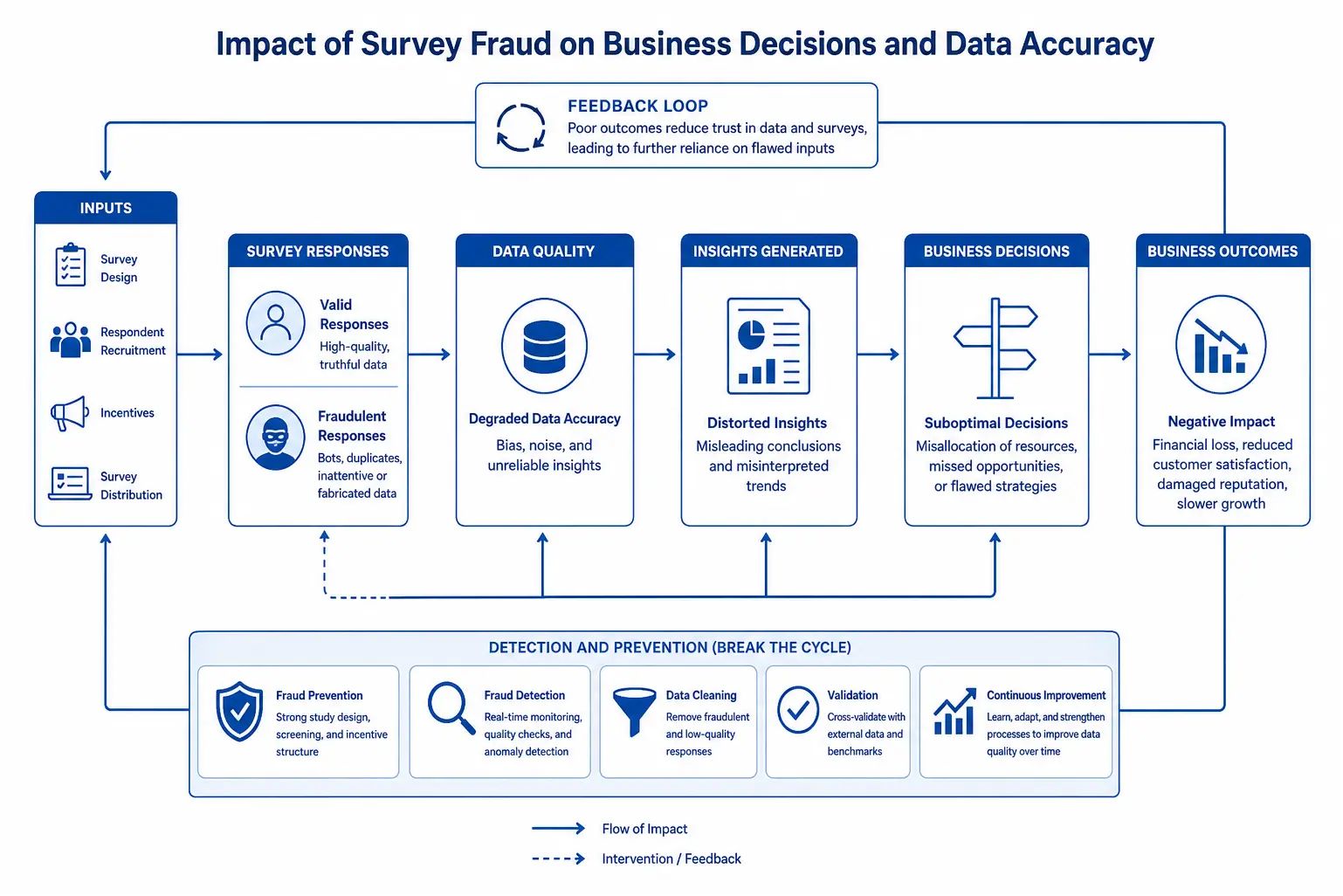
Online survey fraud involves the manipulation or falsification of survey responses, often by automated bots or dishonest participants, to skew results. This fraudulent activity can lead to inaccurate data, impacting business decisions and strategic planning. Addressing survey fraud is crucial for maintaining data integrity and ensuring that business insights are reliable. As digital surveys become more prevalent, the need to combat fraudulent responses intensifies, especially for enterprises dependent on accurate data for competitive advantage.
In recent years, technological advancements have made it easier for fraudsters to exploit online surveys, highlighting the importance of robust detection measures. Businesses are increasingly turning to AI solutions to identify and mitigate fraudulent activities, ensuring that survey data remains both accurate and actionable.
Why Reduce Online Survey Fraud Matters for Businesses in 2026
In 2026, reducing online survey fraud is more critical than ever as businesses increasingly rely on data-driven decisions. According to a Statista report, global data usage will surge by 40% annually, amplifying the impact of fraudulent data on decision-making. Ignoring survey fraud can lead to misguided strategies and financial losses.
Fraudulent survey results can mislead companies about customer needs, disrupt product development, and waste marketing resources. Accurate data is essential for tailoring strategies to meet customer demands effectively. Companies that fail to address survey fraud risk falling behind competitors who leverage accurate insights for growth.
Comparing Methods to Reduce Online Survey Fraud
| Méthode | Cost | Complexity | Le meilleur pour |
|---|---|---|---|
| Manual Verification | Moderate | Haute | Small businesses |
| Basic Algorithmic Filters | Baixo | Moderate | Mid-sized companies |
| AI-Driven Solutions | Haute | Baixo | Large enterprises |
Manual verification is resource-intensive and best suited for smaller operations with limited data. Basic algorithmic filters offer a cost-effective solution for mid-sized companies but may miss sophisticated fraud patterns. Conversely, AI-driven solutions, though more expensive, provide comprehensive fraud detection with minimal human intervention, making them ideal for large enterprises with extensive data needs.
For companies seeking scalable and accurate fraud prevention, AI solutions offer unmatched efficiency and accuracy, justifying their cost. Adopting these technologies ensures robust data integrity and reliable insights.
Best Practices for Reducing Online Survey Fraud
- Implement AI Detection Tools: Use AI to identify unusual patterns and flag potential fraud.
- Regularly Update Algorithms: Keep detection algorithms updated to counter evolving fraud tactics.
- Enhance Verification Processes: Incorporate multi-factor verification to confirm respondent authenticity.
- Conduct Random Reviews: Periodically review survey responses to spot-check for inconsistencies.
- Integrate Behavioral Analysis: Analyze response times and patterns to detect anomalies.
- Educate Respondents: Make participants aware of the importance of genuine feedback.
- Counterintuitive Tip: Shorten surveys to reduce the opportunity for fraud.
How AI Is Changing Reduce Online Survey Fraud in 2026
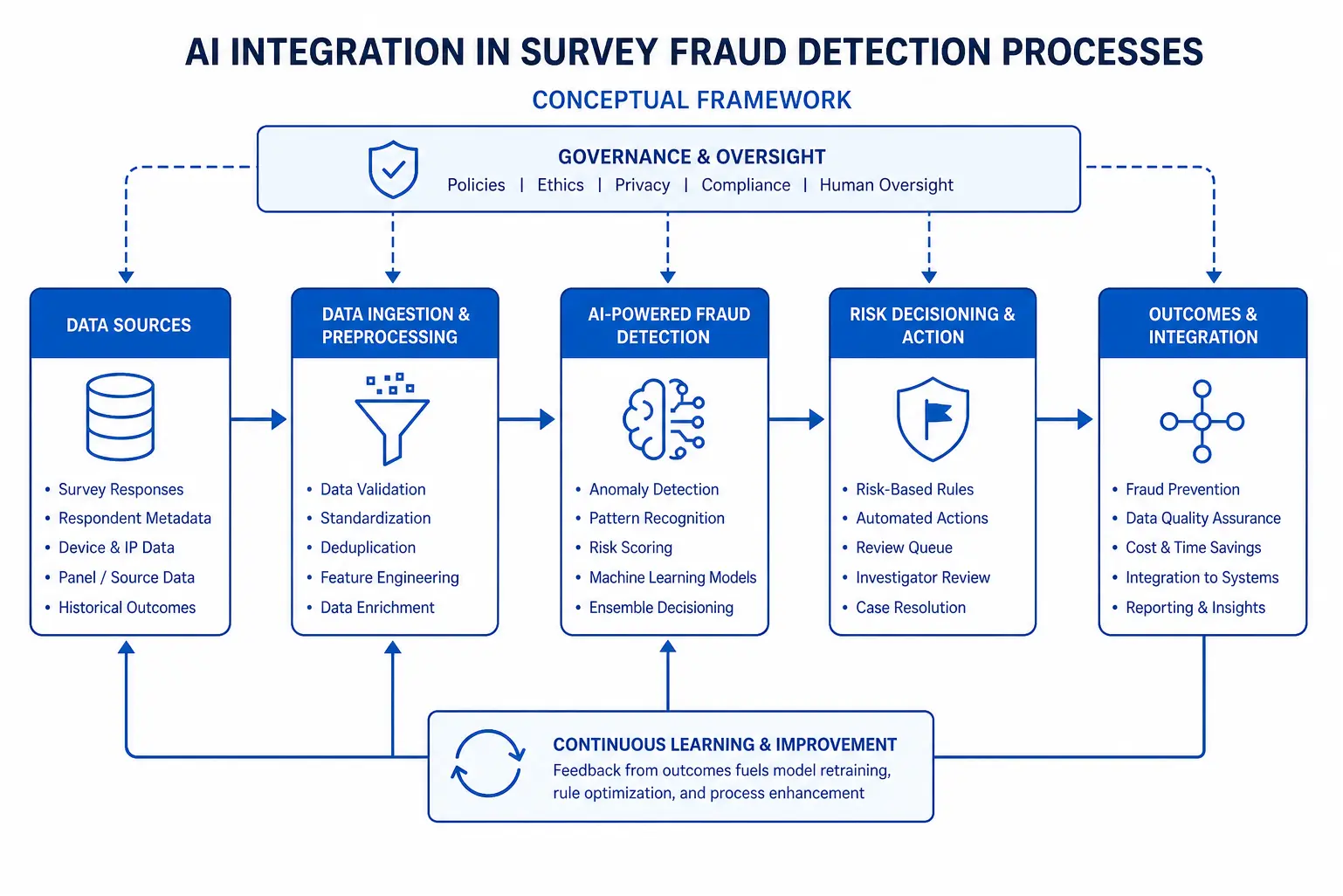
AI is revolutionizing survey fraud detection by utilizing machine learning algorithms to identify and flag suspicious patterns. These technologies analyze response times, consistency, and metadata to detect anomalies. H-in-Q.com is at the forefront of this transformation, providing AI solutions that integrate seamlessly with existing survey platforms.
AI tools are advancing rapidly, offering real-time fraud detection and adaptive learning capabilities. By automating fraud detection, businesses can ensure that their data remains accurate and actionable, providing a competitive edge in strategic planning and customer insights.
Tools & Resources for Reducing Online Survey Fraud
Utilize these tools to enhance your survey fraud prevention efforts:
- SurveyMonkey: Offers basic fraud detection features.
- Qualtrics: Provides advanced AI-driven fraud detection tools.
- Typeform: User-friendly platform with fraud prevention capabilities.
- Google Analytics: Helps analyze survey traffic and identify anomalies.
- IBM Watson: Advanced AI tools for comprehensive data analysis.
Conclusion
Achieving a significant reduction in online survey fraud requires strategic implementation of AI-driven tools and practices. By adopting these technologies, businesses can protect data integrity and enhance decision-making. Effective fraud prevention leads to reliable insights, empowering enterprises to make informed strategic decisions. Explore how H-in-Q.com peut vous aider your business leverage AI for survey integrity. Embrace these innovations to stay ahead in 2026 and beyond.
Questions fréquemment posées
How can AI help reduce online survey fraud?
AI can help reduce online survey fraud by analyzing response patterns, detecting anomalies, and verifying respondent identities, ensuring data integrity.
What are common signs of survey fraud?
Common signs of survey fraud include inconsistent responses, duplicate entries, and unusually fast completion times, which AI tools can help detect.
Why is survey fraud a problem?
Survey fraud skews data accuracy, leading to misleading insights and poor business decisions, which can affect strategy and revenue.
What industries are most affected by survey fraud?
Industries heavily reliant on consumer feedback, such as market research, healthcare, and retail, are most affected by survey fraud.
How can businesses improve survey data accuracy?
Businesses can improve survey data accuracy by using AI-driven fraud detection tools, implementing robust verification processes, and regularly reviewing survey methodologies.
What role does H-in-Q.com play in survey fraud reduction?
H-in-Q.com specializes in AI-powered solutions that enhance survey fraud detection, offering tools that improve data accuracy and business insights.