
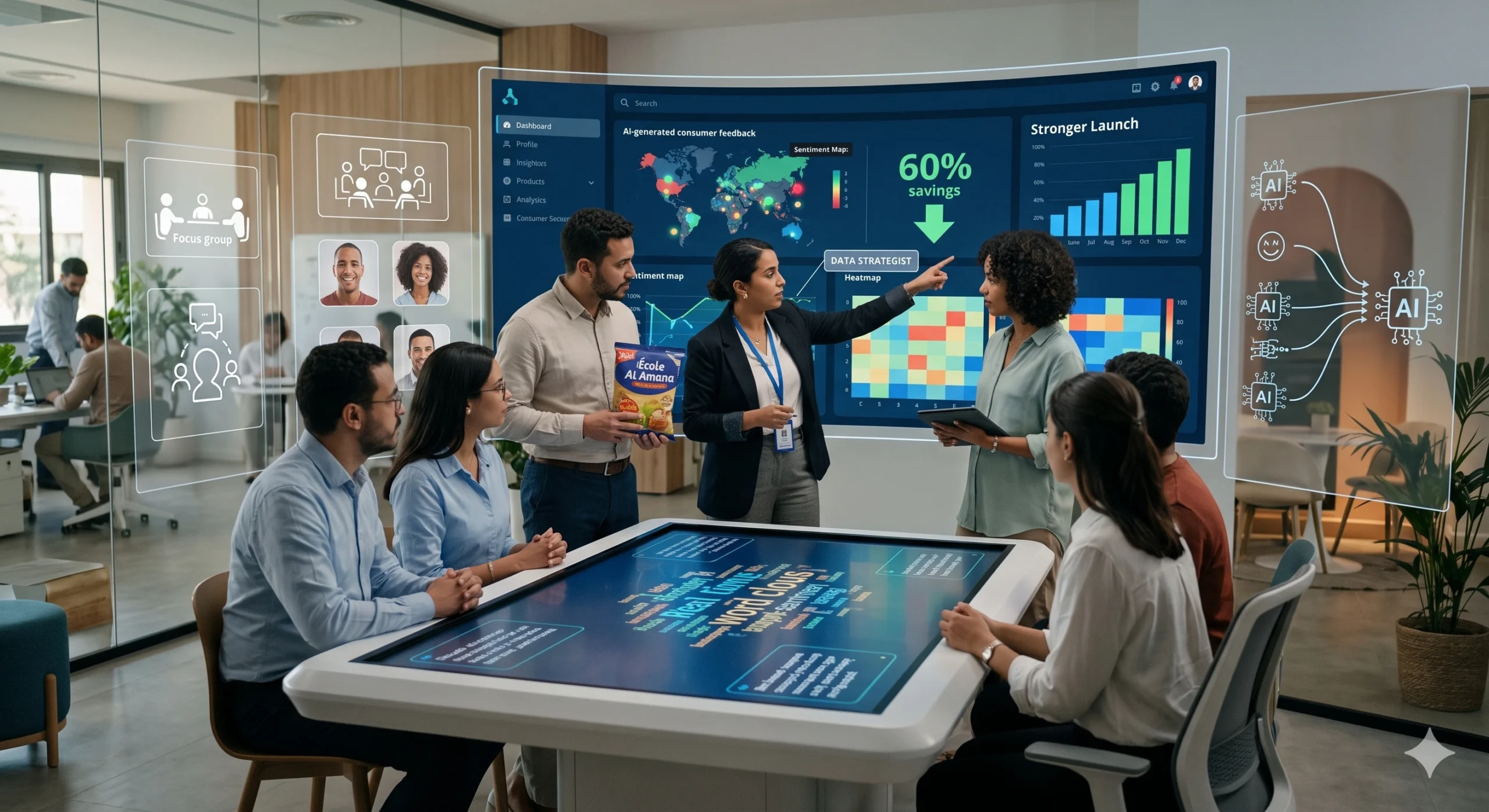
Editor’s Note: While this case study is a hypothetical scenario based on composite industry data, it illustrates how AI-driven methodologies drastically optimize costs and timelines in market research.
The research director at a mid-size US personal care CPG brand had a problem that most marketing teams recognize immediately: a product launch in 14 weeks, three packaging concepts to validate, two messaging platforms to test, and a traditional focus group budget that could fund one study, not the five her team actually needed. The choice was either run one underpowered study and launch on thin evidence or delay the launch and lose the shelf window they had spent six months securing.
What happened over the next nine days changed how that brand runs every research program it has run since. This case study documents the full process; the problem, the methodology shift, the results, and the specific lessons that US CPG research teams can apply to their own programs starting this quarter. The numbers in this case study are drawn from documented industry benchmarks and composite patterns across multiple real CPG brand research transformations; the scenario is representative of the AI focus group transitions H-in-Q’s market research team observes regularly across US and MENA CPG clients.
The Problem: One Budget, Five Research Needs, Zero Time
The brand in this case study manufactures a mid-premium personal care line with strong regional US distribution and a growing e-commerce presence. The research director, whom we will call Maya, was preparing the launch of a new product line extension; a natural ingredient variant of a top-selling SKU, targeting millennial women aged 28–40 in urban and suburban US markets.
Her research needs were specific and non-negotiable:
- Validate which of three packaging concepts generated the strongest purchase intent
- Test two messaging platforms; one emphasizing ingredients, one emphasizing efficacy outcomes
- Understand price sensitivity across two proposed retail price points
- Capture segment-level differences between core buyers and new audience targets
- Generate enough qualitative depth to brief the creative agency on the precise language consumers used about the product category
A full traditional focus group program covering all five needs would have required 4–6 sessions across two US cities, a professional moderator, facility rental, recruitment, incentives, transcription, and analysis. Total budget: $65,000–$85,000. Total timeline: 7–8 weeks. Available budget: $28,000. Available timeline: 3 weeks before the creative brief needed to be locked.
Maya’s team was not underfunded relative to industry norms. They were underfunded relative to their actual research needs; a structural problem that affects every mid-size CPG brand running product launches on realistic marketing budgets.
The Methodology Shift: Three Phases in Nine Days
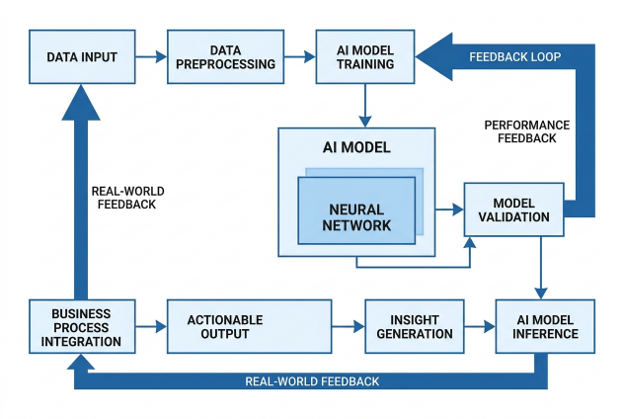
Rather than running one compromised traditional study, Maya’s team restructured the research program around a three-phase AI methodology that covered all five research needs within the available budget and timeline.
Phase 1: Synthetic AI Screening (Day 1 — Cost: $800)
Before recruiting a single real participant, the team used a synthetic AI persona platform to screen all five packaging and messaging hypotheses simultaneously. Eight synthetic personas were generated representing the brand’s target audience segments; four representing core buyers (existing category users aged 28–38) and four representing the new audience target (health-conscious millennials new to the brand).
All three packaging concepts and both messaging platforms were presented to the personas with a structured discussion guide. The synthetic session ran overnight. By 9am on Day 1, the team had directional rankings on all five hypotheses, identified two clear frontrunners for packaging and a dominant messaging platform, and eliminated one packaging concept entirely; saving the cost of testing it with real participants.
Total Phase 1 cost: $800. Time elapsed: 14 hours. Hypotheses eliminated: 1 of 3 packaging concepts, reducing Phase 2 scope by 33%.
Phase 2: AI Community Focus Groups with Real Participants (Days 2–7 — Cost: $11,200)
With the synthetic screening results in hand, the team launched two AI-moderated community focus group sessions on Hivox-in-Q; one with 25 core buyer participants and one with 22 new audience target participants. Each session ran asynchronously over 48 hours, allowing participants to engage on their own schedule while the AI moderator managed discussion flow, ensured equal contribution, and probed vague responses in real time.
The discussion guide focused exclusively on the two finalist packaging concepts and the dominant messaging platform identified in Phase 1; plus the price sensitivity questions and the language-mining exercise. Time that would have been spent on eliminated hypotheses in a traditional study was reallocated to deeper probing of the signals that actually mattered.
Each session generated an average of 847 words of substantive participant response; well above the 400–600 word average for a traditional 60-minute focus group, because AI moderation ensured every participant contributed equally rather than deferring to dominant voices. The community discussion format replicated the group dynamic that surfaces social influence signals, while AI analysis stripped out the groupthink that would have distorted those signals in a traditional setting.
Total Phase 2 cost: $11,200 (two sessions, 47 total participants). Time elapsed: 5 days including recruitment. Participant engagement rate: 89%, significantly above the 65–70% industry average for traditional focus group recruitment.
Phase 3: AI Analysis and Findings Brief (Days 8–9 — Cost: $0 Additional, Included in Platform)
The AI analysis layer processed all 47 participant transcripts simultaneously overnight on Day 7. By morning on Day 8, the platform had delivered: automated sentiment scoring per question per participant, thematic clustering across both sessions, cross-segment comparison (core buyers vs. new audience targets), key quote extraction with participant attribution, and a preliminary findings summary.
Maya’s team spent Day 8 validating the AI’s thematic coding against the research objectives, hunting for outlier responses the frequency-based AI analysis might have deprioritized, and translating the findings into specific recommendations rather than observations. The final findings brief was delivered to the creative agency and brand team on Day 9.
Total Phase 3 elapsed time: 48 hours. Human analyst hours in this phase: 12 hours (versus 80–120 hours for traditional manual thematic coding of equivalent data volume).
The Results: What Changed and By How Much
The headline numbers are significant. The full story is in the decisions they enabled.
Research Program Cost Comparison
| Metric | Traditional Program | AI Program | Difference |
|---|---|---|---|
| Total cost | $72,000 (est.) | $12,000 | −83% |
| Timeline | 7–8 weeks | 9 days | −82% |
| Participants | 48–72 (6 sessions × 8–12) | 47 real + 8 synthetic | Comparable |
| Hypotheses tested | 5 (1 at a time) | 5 (simultaneously) | +0 additional cost |
| Human analyst hours | 120–160 hours | 28 hours | −77% |
| Concepts eliminated before full study | 0 | 1 packaging concept | $4,800 saved |
Research Quality Outcomes
The findings brief identified a clear winner on packaging (Concept B) with a specific insight that neither the brand team nor the agency had anticipated: the winning packaging concept was not selected primarily for its visual design but for the ingredient callout placement, which core buyers associated with a premium positioning signal they had stopped expecting from the category. This insight directly shaped the copy hierarchy in the final creative brief.
The messaging test produced a more nuanced finding than the synthetic screening had suggested. The ingredients-led platform won on purchase intent among new audience targets, but the efficacy-outcomes platform produced significantly stronger brand loyalty signals among core buyers. Rather than choosing one platform, the brand launched with a segmented messaging strategy; ingredients-led for acquisition, efficacy-led for retention, a decision that would have been impossible to make confidently without the segment-level data the AI community sessions produced.
Price sensitivity findings confirmed the higher price point was viable for the new audience target but represented a churn risk for approximately 22% of core buyers, a specific enough finding to trigger a loyalty pricing strategy rather than a blanket retail price.
The findings brief contained 14 specific, decision-ready recommendations. Every one mapped directly to a creative, pricing, or channel decision the brand made in the subsequent 30 days.
Business Outcomes at Launch
The product launched on schedule, seven weeks after the research program closed. Three months post-launch:
- The new SKU achieved 23% above forecast sell-through in its first retail cycle
- Consumer review sentiment matched the positioning language identified in the AI focus group language-mining exercise; the exact vocabulary the brand had used in packaging and digital copy
- The segmented messaging strategy produced a 31% higher email click-through rate for the efficacy-outcomes variant among existing customers versus the ingredients-led variant
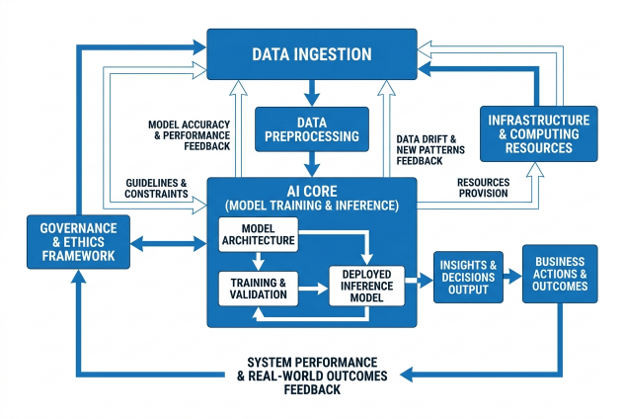
None of these outcomes can be attributed solely to the research program. But the research director’s assessment is direct: the AI focus group program produced better-targeted creative briefs, more confident pricing decisions, and a segmented launch strategy that a single-track traditional study could not have supported within the available budget and timeline.
What Made This AI Research Program Work: 5 Decisions That Mattered
Most AI research transitions that fail do so not because the technology underperforms, but because teams apply traditional research planning logic to a methodology that requires different decisions. These are the five choices that made this program work.
Decision 1: Use Synthetic Screening to Eliminate Hypotheses Before Spending on Real Participants
The $800 Phase 1 investment saved the team $4,800 in Phase 2 costs by eliminating one packaging concept before real-participant testing. More importantly, it freed up Phase 2 discussion time for deeper probing of the winning concepts rather than surface-level evaluation of all three. Every AI research program should start with a synthetic screening phase, even a minimal one.
Decision 2: Run Two Segment-Specific Sessions Rather Than One Combined Session
The decision to separate core buyers from new audience targets; rather than recruiting a mixed group, produced the segmented insights that drove the differentiated messaging strategy. Mixed-group sessions are cheaper. Segment-specific sessions are more actionable. When the decision requires understanding how different segments respond differently, the cost of mixing them is not the money saved, it is the insight lost.
Decision 3: Prioritize Language Mining as a Dedicated Research Objective
Most focus group discussion guides treat language mining as a byproduct; the moderator captures interesting phrases when they occur. Making it an explicit objective, with dedicated prompts designed to surface the vocabulary consumers used to describe the category, the product, and their own needs, produced the linguistic data that made the creative briefs unusually specific. AI analysis made it possible to systematically extract and rank language patterns across 47 participants in hours rather than days.
Decision 4: Build Validation Into the Analysis Phase, Not After It
The team spent Day 8 explicitly validating the AI’s thematic coding before acting on it, checking the most important findings against raw transcript excerpts and looking for outlier responses the frequency-based analysis might have missed. This human-in-the-loop validation step added six hours to the timeline and zero cost. It caught two significant findings the automated analysis had deprioritized because they appeared in fewer than 20% of responses, including the ingredient callout placement insight that became the most commercially valuable finding in the entire study.
Decision 5: Deliver a Findings Brief Structured Around Decisions, Not Observations
The final document the team delivered to the brand and agency was organized around 14 specific recommendations, each linked to a decision the recipient needed to make. It was not a research report summarizing what participants said. Every finding was translated into an action: “Use this exact phrase in the DTC copy,” “Adjust the price point for this channel,” “Lead with this ingredient claim in this placement.” Decision-ready findings get acted on. Observational summaries get filed.
How AI Is Changing CPG Consumer Research in 2026
The case study above is not exceptional; it is representative of what is becoming standard practice among US CPG brands that have made the AI research transition. AI-powered platforms are democratizing access to sophisticated consumer testing that was previously only available to enterprise brands with massive research budgets, enabling mid-size CPG brands to run research programs that compete with enterprise-level insight quality at a fraction of the cost.
95% of CPG leaders now report that AI reduces annual operating costs (McKinsey & Company, The State of AI 2024), and the research function is one of the clearest examples of where that cost reduction compounds into competitive advantage. A brand that runs monthly AI focus group research has a dramatically more current understanding of their consumer than a competitor running quarterly traditional studies and that freshness of insight directly improves the quality of product, packaging, and messaging decisions throughout the year.
The three capabilities that matter most for US CPG research teams making this transition are: a synthetic screening layer for rapid hypothesis elimination, a real-participant AI community platform for authentic qualitative validation, and an AI analysis layer that delivers findings in hours rather than weeks. H-in-Q’s market research suite; combining Hivox-in-Q’s community focus groups, Converse-in-Q’s conversational surveys, and BuzzPulse-in-Q’s social intelligence; is built around exactly this architecture. 👉 Explore the H-in-Q AI market research suite
Tools That Powered This Research Program
Hivox-in-Q
Community AI focus group platform for Phase 2 real-participant sessions. Multilingual support, AI moderation, real-time sentiment analysis, and thematic coding included. 👉 Hivox-in-Q community AI focus group platform
Synthetic Persona Platform (Phase 1)
Used for initial hypothesis screening. Multiple platforms available; Dytto and Sampl are strong options for CPG concept testing.
AI Analysis Layer
Included in Hivox-in-Q’s platform for Phase 2 and 3 analysis. Looppanel and BTInsights are strong standalone options for teams using other session platforms.
Notion
Used for findings brief delivery and cross-team sharing. Integrates natively with Looppanel for repository building. 👉 How to run an AI focus group
FAQ: AI Focus Groups for CPG Brands
How much can AI reduce focus group research costs for a CPG brand?
AI focus groups reduce CPG research costs by 60–83% compared to traditional programs. A traditional 3-session product launch study costs $45,000–$85,000 and takes 6–8 weeks. An equivalent AI-assisted hybrid program; synthetic screening plus real-participant community sessions costs $8,000–$18,000 and delivers findings in 9–14 days. First-project ROI typically exceeds $22,000 when accounting for both vendor cost savings and internal researcher time saved.
Is AI focus group research accurate enough for CPG product launch decisions?
Yes, for concept validation, messaging testing, and positioning research. AI focus groups show 85–92% correlation with traditional focus group findings for these use cases. The CPG brand in this case study launched a product that achieved 23% above forecast sell-through in its first retail cycle, with consumer review sentiment matching the exact positioning language identified in the AI research. No methodology guarantees outcomes, but AI focus group findings are reliable enough to inform confident launch decisions.
How long does a CPG AI focus group research program take?
A complete three-phase program; synthetic screening, real-participant AI community sessions, and AI analysis; takes 9–14 days from brief to findings. This compares to 6–8 weeks for a traditional focus group program of equivalent scope. The timeline assumes a clear research brief at the start; vague objectives add 2–4 days of clarification time that traditional programs absorb through longer planning phases.
How many participants do you need for a CPG AI focus group?
For AI-assisted community sessions, 20–30 participants per segment produces reliable thematic saturation for most CPG research objectives. The brand in this case study ran 25 core buyers and 22 new audience targets in separate sessions; 47 total real participants plus 8 synthetic personas in the screening phase. This sample size produced more actionable segment-level data than a traditional 6-session program would have, at a fraction of the cost.
Can AI focus groups handle multilingual CPG research across US market segments?
Yes. AI community platforms like Hivox-in-Q support native multilingual sessions across English, Spanish, French, and Arabic; enabling US CPG brands to research Hispanic-American, French-Canadian, and MENA audiences in a single research cycle rather than separate programs. Native multilingual support produces significantly better data quality than machine translation layered on English-language research infrastructure.
What are the most important lessons for CPG teams transitioning to AI focus groups?
Five decisions matter most: use synthetic screening to eliminate weak hypotheses before spending on real participants; run segment-specific sessions rather than mixed groups when the decision requires segment-level insight; make language mining an explicit research objective rather than a byproduct; build human validation into the analysis phase before acting on AI-generated findings; and structure the output as decision-ready recommendations rather than observational summaries.
Conclusion
The research director in this case study did not reduce her research program’s quality to fit her budget. She restructured her methodology to get more quality from the same budget; testing more hypotheses, reaching more participants, generating deeper linguistic data, and delivering actionable findings in nine days instead of eight weeks. The $60,000 she did not spend on traditional focus group vendor fees was reinvested in the brand’s paid media budget for launch. The product launched on schedule and over-performed its first-cycle targets.
This outcome is reproducible. The methodology is documented, the tools are available, and the benchmarks are consistent across the CPG brands making this transition in 2026. The question for US CPG research teams is not whether AI focus groups can deliver this kind of result, the evidence is clear that they can. The question is how many product launches, repositioning decisions, and messaging tests your brand will run on insufficient traditional research evidence before building the AI research capability that your competitors are building right now. H-in-Q’s Hivox-in-Q platform is the community AI focus group layer that powers Phase 2 of this methodology, authentic real-participant research at AI scale and speed. Start your first AI focus group study today →
The research program that wins your next launch is the one that starts this week.