

In a typical two-hour traditional focus group, 2–3 participants account for 60–70% of the total speaking time. The remaining 4–5 people; who may represent the majority of your target audience, produce minimal usable data. This is not a moderation failure. It is a structural characteristic of the format that has been documented for decades and has never been solved. It is also one of the reasons 72% of insights teams now use AI in qualitative research, up from 31% just two years prior, according to the Greenbook GRIT Report (2025).
The debate between AI focus groups and traditional focus groups has become one of the most consequential methodology questions in US market research. But most of the content on this topic is written by vendors with a financial interest in one side of the argument. This article is not that. H-in-Q’s AI market research team has laid out the honest evidence on both sides; where AI genuinely outperforms traditional methods, where traditional research still wins, and how the most sophisticated US research programs are combining both in 2026. By the end, you will have a decision framework you can apply to your next research brief today.
What Makes Traditional Focus Groups Valuable and What Makes Them Problematic
Traditional focus groups have been a cornerstone of qualitative research for over 60 years. That longevity is not an accident; the format produces something genuinely valuable: the observation of how real consumers interact with each other around a shared topic, building on ideas, triggering memories, and revealing social dynamics that no individual interview can replicate.
When a participant’s comment visibly changes how three other participants think about a product, that group dynamic is data. When a consumer hesitates before answering a question about a sensitive brand association, that physical hesitation is data a transcript cannot capture. When a consumer physically handles a prototype and their body language contradicts their verbal response, that contradiction is data. These are the irreplaceable strengths of traditional focus groups, and they are real.
The problems, however, are equally real and equally structural.
The five systemic flaws of traditional focus groups that no skilled moderation can fully eliminate:
- Groupthink. In a typical two-hour session, dominant personalities steer the conversation. Quieter participants; who may represent the largest segment of your audience, self-censor to maintain group harmony. The data you collect reflects the opinions of your most vocal 2–3 participants, not your target market.
- Social desirability bias. When a brand team is observing behind one-way glass, participants know they are being watched. They respond to what they believe the moderator wants to hear. Negative feedback is softened; positive feedback is amplified. The result is data that consistently overstates consumer enthusiasm for new concepts.
- Moderator influence. Even skilled, well-intentioned moderators inadvertently steer discussions through question phrasing, body language, and probing patterns. This is not incompetence; it is a documented feature of human-to-human interaction that cannot be fully engineered out of the format.
- Cost and timeline. A single traditional focus group session costs $7,000–$30,000 in 2026, including recruitment, facility rental, moderator fees, incentives, transcription, and analysis. The full project cycle; from brief to actionable report, runs 4–8 weeks. By the time insights arrive, market conditions have often shifted.
- Geographic constraint. Traditional focus groups recruit participants near a physical facility. This structurally limits sample diversity to the demographic composition of one city or region, a significant limitation for US brands researching national or multi-market audiences.
What AI Focus Groups Actually Fix and What They Don’t
AI focus groups eliminate four of the five structural flaws above with near-complete reliability. The fifth; geographic constraint, they eliminate entirely. What they cannot replicate is the physical, emotional, and group-dynamic authenticity of in-person human interaction.
What AI focus groups fix definitively:
Groupthink elimination. In AI-assisted platforms, every participant contributes independently before group dynamics are introduced. In synthetic platforms, each persona responds based on its own psychographic profile without awareness of other responses. The dominant-voice problem disappears by design.
Social desirability bias reduction. Research by Conveo (2025) found that 83% of respondents feel more open with AI interviewers than with human moderators. Removed from the social pressure of a group setting and a human observer, participants provide more honest negative feedback; the most commercially valuable type of research data.
Moderator consistency. An AI moderator applies identical probing standards to every participant in every session. It does not get tired in hour three, does not unconsciously favor articulate participants, and does not vary its approach based on the brand team’s reaction behind the glass. Consistency of moderation is the single most underappreciated advantage of AI focus groups, and it directly improves data reliability across every session.
Cost and timeline. AI-assisted platforms with real participants run $2,000–$8,000 per project. Synthetic platforms run $100–$500 per study. Timelines compress from 4–8 weeks to 1–2 days for AI-assisted and hours for synthetic. This is not a marginal improvement; it is a structural change that makes continuous research economically viable for the first time for most US businesses.
What AI focus groups cannot yet replace:
Physical and sensory interaction. No AI platform can replicate the data produced when a consumer physically handles a product prototype, tastes a new food formulation, or navigates a physical retail environment. If your research objective requires sensory experience, traditional in-person research is still the only valid methodology.
Unprecedented product categories. Synthetic AI personas are pattern-matching systems trained on historical behavioral data. When Apple introduced the iPhone in 2007, no amount of synthetic research could have predicted the full spectrum of consumer reactions to a device category that did not yet exist. If your product is genuinely unprecedented; with no adjacent category from which AI can extrapolate, real human encounters with the novel experience are essential.
Emotional depth on sensitive topics. Research on grief, trauma, chronic illness, major life transitions, and other emotionally complex topics benefits from the human sensitivity and contextual reading that an experienced moderator brings. AI moderation handles these topics with consistency but without the empathetic judgment that can unlock the deepest qualitative insights.
Stakeholder observation value. Sometimes the research output is not the point; the point is getting your brand team in a room (or behind glass) watching real consumers react to their work in real time. That organizational alignment and conviction-building function has no AI equivalent.
Head-to-Head Comparison: AI vs Traditional Focus Groups Across 10 Dimensions
| Dimension | Traditional Focus Group | AI-Assisted | Synthetic AI |
| Cost per session | $7,000–$30,000 | $2,000–$8,000 | $100–$500 |
| Timeline | 4–8 weeks | 1–2 weeks | Hours |
| Sample size | 6–12 | 20–500+ | Unlimited |
| Groupthink risk | High | Low | Eliminated |
| Moderator bias | High | Low | Eliminated |
| Social desirability bias | High | Medium | Low |
| Emotional authenticity | Highest | High | Moderate |
| Sensory/physical research | ✅ | ❌ | ❌ |
| Geographic reach | Limited | Global | Global |
| Iterative testing | 1 round/month | Weekly | Daily |
The 4 Scenarios Where Traditional Focus Groups Still Win in 2026
Most AI advocates will not tell you this. The honest answer is that traditional research remains the right choice in four specific scenarios and forcing AI into these use cases produces inferior data.
Scenario 1: Physical product interaction is the research objective. Testing packaging tactility, food taste, fragrance, apparel fit, or any research where the consumer’s physical experience with the product generates the insight. No digital format; AI or otherwise, substitute here.
Scenario 2: Observing social influence dynamics is the research objective. If you need to understand how consumers influence each other’s opinions, how brand advocacy spreads within a social group, how purchase decisions are negotiated in household contexts, how peer pressure affects product adoption; the group dynamic of traditional focus groups is not a bug, it is the feature you are paying for.
Scenario 3: Stakeholder conviction requires live consumer observation. When a product launch, brand repositioning, or major creative campaign requires internal alignment, nothing builds organizational conviction like watching real consumers react in real time. The emotional impact of a live focus group on a skeptical product team is a legitimate research output that AI cannot replicate.
Scenario 4: Genuinely unprecedented product or experience categories. If there is no existing behavioral data from which AI can extrapolate; if you are truly creating a new category, synthetic personas will produce plausible sounding but unreliable outputs. Real human encounters with genuine novel experiences are necessary.
The 5 Scenarios Where AI Focus Groups Clearly Win in 2026
Scenario 1: Concept screening across multiple options. Testing 5–10 messaging variants, creative concepts, or product names before investing in full research. AI delivers reliable directional rankings in hours at 5–10% of traditional research costs.
Scenario 2: Multi-market or multilingual research. Running simultaneous research across US English, Spanish, French, and Arabic audiences is logistically prohibitive with traditional methods. AI platforms like HiVox-in-Q handle multilingual community sessions natively, delivering cross-market comparisons in a single research cycle.
👉 HiVox-in-Q multilingual platform
Scenario 3: Continuous research programs. Brands that need to track messaging performance, monitor competitive response, or iterate creative based on weekly consumer feedback. Traditional research cannot support weekly cadence at enterprise scale. AI can.
Scenario 4: Budget-constrained teams that previously did no research. For mid-market US companies that could never justify $30,000 for a single focus group study, AI focus groups have collapsed the entry cost to a level where continuous consumer insight is economically viable. Teams that were flying blind on product and marketing decisions now have access to research-grade data.
Scenario 5: Hypothesis generation before full-scale research. Running a synthetic AI focus group before committing budget to a traditional study. Identify which concepts are worth validating with real participants, refine the discussion guide based on synthetic outputs, and enter the traditional session with better-targeted questions. This hybrid approach cuts total research cost by 40–60% while improving the quality of the traditional session.
How AI Is Changing Traditional Focus Group Research in 2026
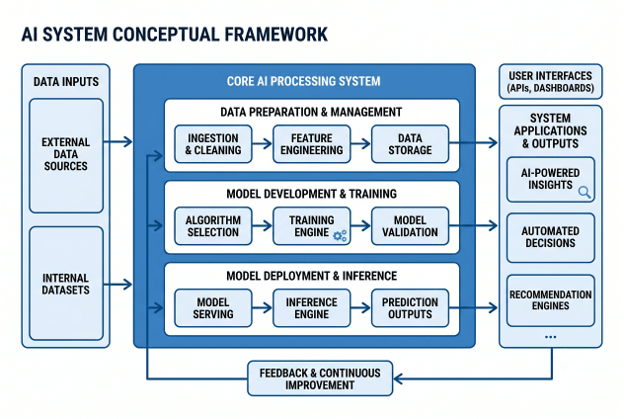
The most important development in focus group research in 2026 is not the replacement of traditional methods by AI; it is the hybridization of both. The leading US research programs are not choosing between AI and traditional; they are sequencing them strategically to extract maximum insight at minimum cost.
The standard hybrid research protocol now looks like this: Phase 1 uses synthetic AI focus groups to screen 5–10 hypotheses and identify the 2–3 strongest candidates, at a cost of $500–$1,500 and a timeline of one day. Phase 2 deploys AI-assisted focus groups with real participants to validate the leading candidates at scale, at $3,000–$6,000 over one week. Phase 3 runs a single traditional in-person session where key stakeholders observe live consumer reactions to the validated winner; building organizational conviction for the final decision. Total cost: $10,000–$15,000 versus $48,000–$90,000 for a traditional multi-group study. Total timeline: 2–3 weeks versus 8–12 weeks.
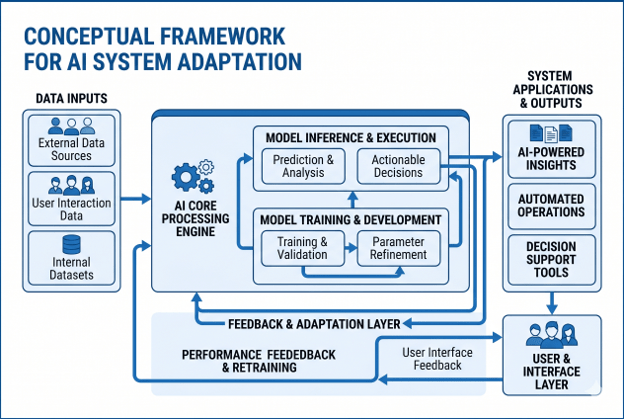
The hybrid model does not compromise insight quality; it improves it by applying the right methodology to each stage of the research process. H-in-Q’s HiVox-in-Q platform is designed to sit in Phase 2 of this model: community-based AI focus groups with real participants that deliver authentic qualitative depth at AI scale, with full multilingual support for US brands researching diverse or international audiences.
Tools That Bridge the AI vs Traditional Divide
The platform choice matters enormously for hybrid research programs. The tools that work best are those designed for the specific role they play in the research sequence rather than general-purpose platforms stretched to fit every use case.
- HiVox-in-Q: Community AI focus groups with real participants. The Phase 2 validation platform for US brands running multilingual research across EN, FR, ES, and AR markets. 👉HiVox-in-Q
- Dytto / Sampl: Synthetic persona platforms for Phase 1 hypothesis screening. Fast, low-cost, reliable for directional concept testing.
- io / Remesh: Enterprise-grade AI-assisted platforms for large-scale real-participant validation.
👉 AI focus group platforms compared - Looppanellooppanel / BTInsights: AI analysis tools that compress post-session analysis regardless of which platform ran the session.
- Traditional facility-based providers: Still the right choice for Phase 3 stakeholder observation sessions and any research requiring physical product interaction.
FAQ: AI Focus Groups vs Traditional Focus Groups
Are AI focus groups as accurate as traditional focus groups?
For concept testing, messaging evaluation, and directional research, studies show 85–92% correlation between AI focus group outputs and traditional research findings. AI focus groups produce more consistent results by eliminating moderator bias and groupthink. For research requiring physical interaction, emotional depth on sensitive topics, or genuinely unprecedented product categories, traditional methods retain an accuracy advantage.
What are the biggest disadvantages of traditional focus groups?
The five structural disadvantages are: high cost ($7,000–$30,000 per session), slow timelines (4–8 weeks), groupthink from dominant participants who account for 60–70% of speaking time, moderator bias that inadvertently steers responses, and geographic constraints that limit sample diversity to participants near a physical facility.
Do AI focus groups have bias?
AI focus groups eliminate human-driven biases like groupthink, moderator influence, and social desirability effects. However, they introduce algorithmic bias if trained on unrepresentative datasets. Best practice requires diverse training data, confidence scoring for AI-generated themes, and mandatory human review of final insights before acting on them.
How much cheaper are AI focus groups than traditional?
AI-assisted focus groups with real participants cost 70–80% less than traditional sessions; $2,000–$8,000 versus $7,000–$30,000. Synthetic AI focus groups cost 90–95% less, running $100–$500 per study. A hybrid research program using all three methodologies in sequence typically costs 60–70% less than a traditional multi-group study while delivering equivalent or superior insight quality.
When is traditional focus group research still worth the cost in 2026?
Traditional focus groups remain the right choice for four scenarios: research requiring physical product interaction (taste, touch, fit), research where observing social influence dynamics is the objective, high-stakes decisions where stakeholder observation of live consumer reactions builds organizational conviction, and research on genuinely unprecedented product categories where AI has no historical data to extrapolate from.
Can AI focus groups handle sensitive or emotional research topics?
AI focus groups perform well on sensitive topics where participants prefer the anonymity of a non-human moderator; 83% of respondents report feeling more open with AI than human moderators (Conveo, 2025). For research requiring deep emotional processing, human empathy, or trauma-informed facilitation, experienced human moderators retain a qualitative edge that current AI platforms have not matched.
Conclusion
The AI versus traditional focus group debate has a clear answer in 2026: it is not a binary choice and framing it as one is the most expensive mistake a US research team can make. Traditional focus groups retain genuine, irreplaceable advantages in four specific scenarios. AI focus groups outperform traditional methods on cost, speed, scale, and bias control across the majority of common research objectives. The research programs winning in 2026 are those that have stopped asking “which method is better” and started asking “which method is right for this specific research objective at this stage of the decision process.”
The hybrid sequencing model; synthetic AI for hypothesis screening, AI-assisted community platforms for validation, traditional sessions for stakeholder conviction, delivers the best of both approaches at 30–40% of the total cost of an all-traditional program. H-in-Q’s HiVox-in-Q platform is built for the validation stage of this sequence: authentic community-based qualitative research with real participants, AI analytical infrastructure, and native multilingual support for the US brands that need both depth and breadth.
Explore how HiVox-in-Q fits your research program →
The brands making the best research decisions in 2027 are building this hybrid capability now.